TL;DR
- 360 degree immersive technology captures an entire scene in every direction, letting viewers look around freely instead of watching a fixed camera angle.
- This technology powers virtual tours, trade show activations, and brand campaigns by making viewers feel present inside a space rather than just watching it.
- 360 degree video VR differs from full VR since one is filmed footage you explore by looking around, while the other is a fully computer generated world.
- Brands use panoramic immersive content to boost engagement, extend dwell time, and create memorable experiences that standard photos or videos cannot match.
Introduction
If you have ever dragged your finger across a video and watched the scene spin around you, you have already experienced 360 degree immersive technology firsthand.
This format gives viewers a sense of presence that flat video cannot offer, since the viewer controls where they look instead of following a fixed angle.
This blog explains what the technology is, how it works, where it differs from full VR, and how brands are using it today.
What is 360-Degree Technology in Immersive Experiences?
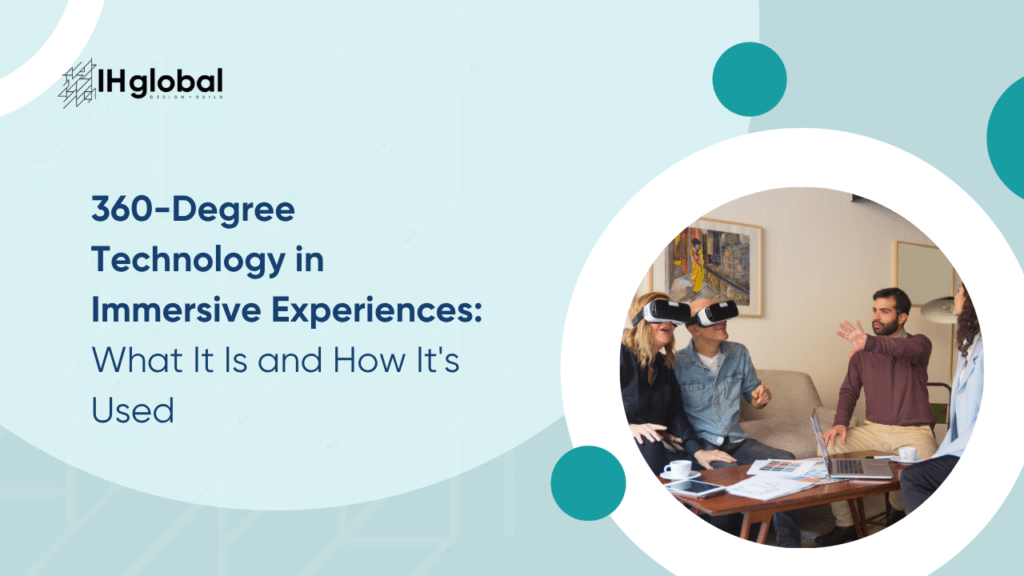
360-degree technology allows users to view and explore digital content from every angle. Instead of looking at a single screen perspective, people can move their view in all directions, making the experience feel more realistic and immersive.
This technology is widely used in virtual tours, travel experiences, education, events, and marketing. For example, a business can create a 360-degree virtual tour of a showroom or exhibition space, allowing people to explore it online as if they were physically present.
By creating a stronger sense of presence and interaction, 360-degree experiences help users understand spaces, products, and environments more effectively.
How 360 Degree Immersive Technology Works
360 degree immersive technology captures, processes, and displays an entire environment, allowing users to explore every angle naturally. Unlike traditional videos, it creates a more realistic and interactive experience by giving viewers control over their perspective.
Several stages work together to turn raw footage into a seamless immersive experience that can be viewed across different devices and platforms.
Below are the key steps that make 360 degree experiences possible.
- Multi-lens capture – Specialized 360 degree camera technology uses several lenses pointed in different directions to record the entire scene at the same moment, leaving no gaps in coverage.
- Stitching – Software blends the separate lens feeds into one seamless spherical image, smoothing out the overlapping edges so the final footage looks continuous rather than pieced together.
- Compression and formatting – The stitched footage is compressed into a file format that media players and VR headsets can read without losing too much visual quality.
- Playback rendering – Compatible apps or headsets render the spherical footage in real time, allowing the viewer to pan around smoothly using touch, mouse movement, or head tracking.
- Interactive layering (optional) – Many experiences add clickable hotspots, info panels, or navigation points on top of the footage, turning passive video into something closer to a guided tour.
This pipeline is what makes panoramic immersive content possible at scale, whether the final product is a short social clip or a full virtual property tour.
360° Content vs Full VR, What’s the Difference?
Both technologies create immersive experiences, but they work differently. 360 degree video uses real recorded footage, while VR usually uses computer-generated environments.
The table below shows the main differences between 360 degree video and virtual reality.
| Feature | 360 Degree Video | Full VR Environment |
| Content Type | Real filmed footage | Computer generated graphics |
| Viewer Movement | Look around from a fixed point | Move freely through the space |
| Production Cost | Generally lower | Generally higher |
| Interactivity | Limited, mostly passive viewing | High, often includes interactive objects |
| Common Use Cases | Virtual tours, event recaps, brand films | Training simulations, product configurators |
Both formats have a place in a brand’s toolkit, since 360 content is faster to produce while full VR offers deeper interactivity for training or product demonstrations.
Applications of 360 Degree Technology
This technology has moved well beyond novelty videos and now plays a real role in marketing, training, and live events. The two sections below cover where it delivers the most value.
360° at Trade Shows and Exhibitions
360 degree experiences help trade show booths attract more attention and keep visitors engaged for longer. Instead of only looking at displays, attendees can explore products, services, or virtual environments in a more interactive way.
This type of experience works well in busy exhibition halls because it is engaging and memorable. Many exhibition teams use 360 degree content to create stronger visitor experiences and encourage meaningful interactions.
360° for Corporate Brand Experiences
Businesses use 360 degree content to showcase products, services, workplaces, and brand stories in a more immersive way. It allows viewers to explore an environment and understand a brand from different angles.
For example, a hotel can offer a virtual room tour, or a company can create a behind-the-scenes experience. This helps build trust and gives customers a better understanding before making a decision.
Benefits of 360 Degree Technology for Brands
Brands invest in this format because it delivers measurable advantages over standard content, especially when attention and engagement are limited resources
Below are the key benefits of 360 degree technology for brands.
- Higher engagement. Viewers tend to spend more time exploring a 360 scene compared to watching a short flat video, since the format invites active participation rather than passive viewing.
- Stronger brand recall. Interactive, immersive experiences tend to stick in memory longer than ordinary photos or video, helping a brand stay top of mind after the interaction ends.
- Lower production cost than full VR. Since 360 content relies on real footage rather than built environments, it remains accessible to small and mid sized businesses with modest budgets.
- Cross platform versatility. The same footage can be repurposed across social media, websites, and live events, stretching the value of a single production across multiple channels.
- A clear competitive edge. Many competitors still rely on traditional photos and video, so a well produced 360 experience can immediately set a brand apart.
How to Create a 360 Degree Immersive Experience
Creating a 360 degree immersive experience starts with choosing the right camera and planning the scene carefully. Since the camera captures every direction, everything visible in the environment needs to be considered before filming.
After recording, the footage is stitched together using specialized software to create one seamless panoramic view. Interactive features such as hotspots, menus, or navigation points can also be added to improve user engagement.
Before publishing, test the experience on phones, desktops, and VR headsets to ensure smooth performance and a consistent user experience.
Quick Tips:
- Use a camera that matches your project goals.
- Keep unwanted equipment out of the frame.
- Add interactive elements when needed.
- Test across multiple devices before launch.
Examples of 360° Technology in Action
360 degree technology is used across many industries to create more engaging and interactive experiences. The examples below show how businesses use immersive content to help people explore products, locations, and events in a more realistic way.
- Virtual Property Tours – Real estate companies use 360 degree virtual tours to let buyers explore homes remotely. This helps people view properties from anywhere and shortlist options before visiting in person.
- Product Launch Activations – Brands use 360 degree content during product launches so viewers can examine products from every angle. This creates a more engaging experience than traditional photos or videos.
- Trade Show Booth Experiences – Companies use 360 degree experiences at trade shows to attract visitors and showcase products or services in an interactive way. This helps booths stand out in busy exhibition environments.
- Destination Previews
Travel companies create 360 degree previews of hotels, resorts, and tourist attractions. These experiences help potential customers visualize destinations before making a booking decision. - Museum and Exhibit Access – Museums use virtual 360 degree tours to give visitors access to exhibits from anywhere in the world. This improves accessibility and allows more people to experience cultural attractions.
These examples show why 360 degree immersive technology continues to grow in popularity. It helps businesses create engaging experiences, improve customer understanding, and tell stories in a more interactive way.
As immersive content becomes more common, organizations such as IH Global continue exploring how these experiences can support stronger audience engagement at events and digital touchpoints.
FAQs
What is 360-degree technology in immersive experiences?
360 degree immersive technology captures an entire scene from every direction at once, letting viewers look around freely instead of watching one fixed angle. It is widely used in virtual tours, trade show activations, and brand films to build stronger viewer engagement.
How is 360-degree video different from virtual reality?
360 degree video VR is filmed footage explored from a fixed point, while full virtual reality is usually a computer generated environment allowing free movement. 360 video tends to be faster and cheaper to produce, while full VR offers deeper interactivity.
What equipment do you need to create 360-degree content?
Creating 360 degree content requires a multi-lens 360 degree camera, stitching software to blend footage into one sphere, and a compatible playback platform. Professional shoots may also use stabilization rigs, external audio gear, and additional lighting for higher quality output.
How can businesses use 360-degree technology for brand marketing?
Businesses use 360 video brand activation for product launches, virtual showrooms, and behind the scenes content that lets customers explore a space from every angle. This builds engagement and brand recall through an interactive, presence driven viewing experience.
What are the best platforms for publishing 360-degree immersive content?
Popular platforms for panoramic immersive content include YouTube, Facebook, and dedicated VR tour hosting services, all supporting 360 degree playback on phones, desktops, and headsets. Platform choice depends on the audience and headset compatibility needs.
Can 360-degree technology be used at trade shows and exhibitions?
Yes, 360 degree at trade shows is increasingly common, with brands using headset stations or interactive screens to let visitors explore branded environments virtually. This draws foot traffic and creates memorable interactions that standard booth displays rarely deliver.
What is the difference between passive and interactive immersive content?
Passive 360 degree content lets viewers look around a fixed scene without changing it, while interactive content allows clicking, selecting, or triggering actions within the experience. Interactive formats tend to hold attention longer and suit guided tours well.
How much does it cost to create a 360-degree immersive experience?
Costs vary depending on production quality, ranging from a few hundred dollars for basic consumer grade footage to tens of thousands for a fully produced virtual tour or brand activation with editing, voiceover, and interactive elements included.