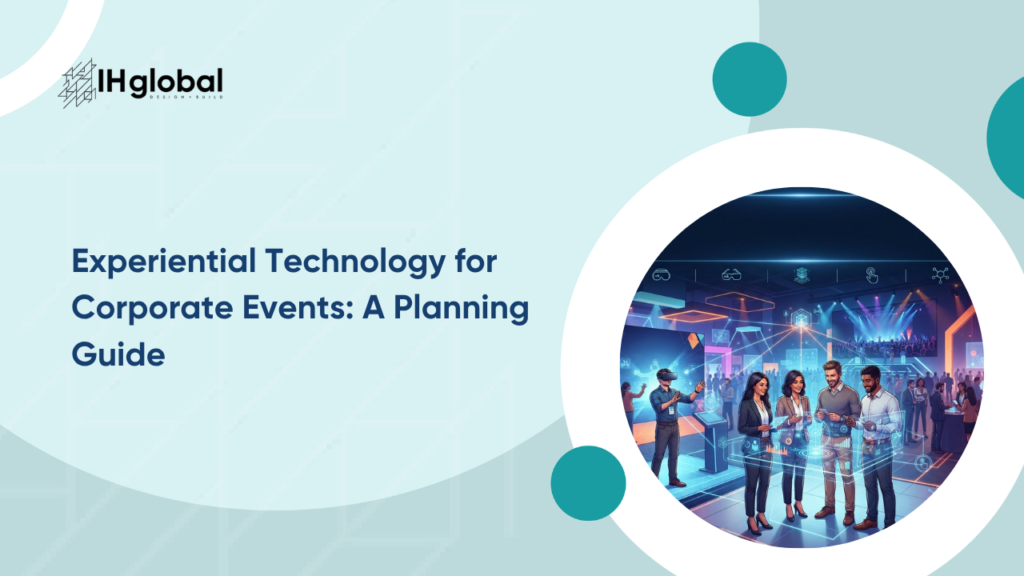
Corporate events have moved beyond stages, presentations, and branded backdrops. Today, audiences expect experiences that are engaging, relevant, and easier to remember. Experiential technology for corporate events gives organisers new ways to turn presentations, product demonstrations, networking, and brand moments into interactive experiences.
From interactive audience tools and LED walls to projection mapping and integrated event systems, the right technology can support both attendee engagement and business objectives. The key is choosing technology based on the event’s purpose rather than adding technology simply because it looks impressive.
TL;DR
- Interactive technology can turn passive attendees into active participants through touch, gesture, polling, Q&A, and other engagement tools.
- LED walls and projection mapping can transform conference stages, product reveals, and keynote presentations into more dynamic visual experiences.
- Corporate event technology works best when registration, audience interaction, content, displays, and data systems are planned as one connected experience.
- Planning early gives teams more time for content production, technical testing, venue checks, and integration.
- The right technology for conferences or corporate events should support a clear objective, audience need, venue requirement, and realistic budget.
Why Corporate Events Need More Than a Stage and a Screen
A conventional stage and screen can communicate information, but they do not necessarily create participation. Corporate audiences may spend hours moving between keynotes, presentations, demonstrations, and networking sessions, making it increasingly important to create moments that encourage interaction.
This is where experiential technology can add value. Interactive displays, audience engagement systems, LED environments, and projection-based visuals can make information easier to explore and create stronger focal points within an event.
Current event-industry research also highlights the growing role of technology alongside human connection and attendee experience. Amex GBT’s 2026 Global Meetings and Events Forecast identifies technology, productivity, data-driven planning, and deeper attendee engagement among the priorities shaping meetings and events. Amex GBT’s 2026 Global Meetings and Events Forecast provides further context.
For corporate organisers, the objective should not be to make every element interactive. Instead, technology should be used where it improves communication, participation, storytelling, or the overall attendee journey.
Experiential Technology Options for Corporate Events
The best technology mix depends on the type of corporate event, audience size, venue, content, and objective. A leadership conference may need different solutions from a product launch or employee town hall.
IH Global’s experiential technology solutions include interactive installations, LED and video walls, projection mapping, holographic displays, kinetic experiences, and event technology integration for corporate events and brand activations.
Interactive Audience Engagement Tools
Interactive technology can give attendees a direct role in the event rather than making them passive viewers. For conferences and internal events, this can include live polling, Q&A systems, touchscreen interfaces, gesture-controlled displays, interactive data walls, and other participation tools.
For a corporate event brand activation, interactive installations can also help audiences explore products, content, or brand stories. IH Global’s interactive installation design capabilities include touchscreen walls, motion-sensitive experiences, gesture control, interactive photo booths, product configurators, and multi-touch data walls.
The most effective interactive corporate event ideas usually have a simple purpose. An interactive product configurator might help visitors understand a complex product, while live audience interaction can make a conference session more participatory.
LED Walls and Stage Visuals
LED walls can provide the visual foundation for a keynote, awards ceremony, conference, product launch, or executive presentation. Unlike a conventional projection screen, LED systems can create large, bright visual surfaces that become part of the stage design.
They can display presentations, motion graphics, speaker visuals, brand content, product animations, or live event feeds. Content can also be changed throughout an event, allowing one display system to support different sessions.
For corporate events, LED and video wall solutions can be planned around the venue, viewing distance, stage structure, content requirements, and technical setup rather than treated as a standalone screen rental.
Projection Mapping for Keynotes and Reveals
Projection mapping can turn a stage, architectural surface, product, or physical structure into a dynamic visual canvas. This makes it particularly useful for opening ceremonies, keynote sequences, product reveals, company milestones, and corporate storytelling.
For example, a keynote could begin with a projection sequence that introduces a company’s history before transitioning into its future strategy. A product launch could use mapped visuals to build anticipation before the physical reveal.
Projection mapping for corporate events needs to be planned around the surface, projector placement, venue lighting, content, and physical environment. Site assessment and technical rehearsal are therefore important parts of the process.
Event Technology Integration: Making Everything Work Together
A corporate event can involve registration, access control, audience interaction, presentations, displays, content playback, data collection, and live technical systems. If each element is managed separately, even impressive technology can create a fragmented attendee experience.
Event technology integration connects these systems into a coordinated setup. For example, registration and access systems can connect with attendee data, while audience interaction tools can support live polling and Q&A during conference sessions.
IH Global’s event technology integration services cover systems such as gesture control, RFID/NFC tracking, facial-recognition check-in, smart registration, and live audience engagement tools. The company describes integration as a way to manage these technology touchpoints under one accountable team.
This matters particularly for large conferences and multi-session corporate events. A coordinated technical plan can reduce compatibility problems, clarify responsibilities, and give the event team a single framework for testing and live support.
Planning Timeline and Budget Considerations
Experiential technology should be considered during the early planning stage, not after the venue, stage, and event programme have already been finalised.
Start by defining the event objective. Decide whether technology needs to improve audience participation, communicate complex information, create a product reveal, support networking, collect engagement data, or simply strengthen the visual environment.
Then assess the venue and technical requirements. Screen or LED dimensions, viewing distances, projection surfaces, lighting conditions, power, rigging, internet connectivity, floor space, and audience movement can all affect the final solution.
For budgeting, avoid treating technology as one fixed cost. Your corporate event technology budget may include hardware, software, content production, fabrication, installation, integration, technical rehearsals, on-site support, and dismantling.
A practical planning process can look like this:
- 8–12+ weeks before: define objectives, audience, venue, technology requirements, and budget.
- 6–8 weeks before: finalise the technology concept, content requirements, system specifications, and production plan.
- 3–6 weeks before: develop interactive content, presentation visuals, animations, and other digital assets.
- 1–2 weeks before: complete technical testing, system checks, content verification, and event rehearsals.
- Event day: install, calibrate, test, monitor, and provide live technical support.
The exact timeline varies considerably with scale. A simple interactive display can require far less preparation than a multi-technology conference environment involving LED walls, interactive systems, custom content, and integrated audience data.
Conclusion
The value of experiential technology for corporate events is not simply that it makes an event look more impressive. Used properly, it can improve participation, strengthen storytelling, simplify complex information, and create memorable moments for employees, clients, partners, or prospects.
The right solution depends on the event objective. Interactive tools can encourage participation, LED walls can strengthen the visual environment, projection mapping can support major reveals, and integrated event technology can connect multiple systems into one experience.
Planning these elements early allows the creative, physical, and technical requirements to be developed together. That makes it easier to create an event where technology supports the experience rather than becoming a distraction.
Frequently Asked Questions
1. What experiential technology works best for corporate events?
It depends on the event objective. Interactive installations suit audience participation, LED walls work well for stages and presentations, while projection mapping can create high-impact keynote and reveal moments. Large events may combine several technologies.
2. How do I plan technology for a corporate conference or product launch?
Start with the objective, audience, venue, programme, and budget. Then select the technology, develop content, assess technical requirements, and schedule testing and rehearsals well before the event.
3. What is event technology integration and why does it matter?
Event technology integration connects systems such as registration, audience engagement, access control, content, and data collection. It helps different technology components work together rather than operating as disconnected systems.
4. How much should a corporate event budget for experiential technology?
There is no universal figure because costs depend on the technology, scale, venue, content, fabrication, integration, and technical support required. A project-specific budget should account for both technology and implementation costs.
5. Can experiential technology be used for internal company events, not just customer-facing ones?
Yes. It can be used for employee town halls, leadership meetings, annual conferences, training events, celebrations, and internal launches. Interactive content and immersive visuals can make internal communications more engaging and participatory.