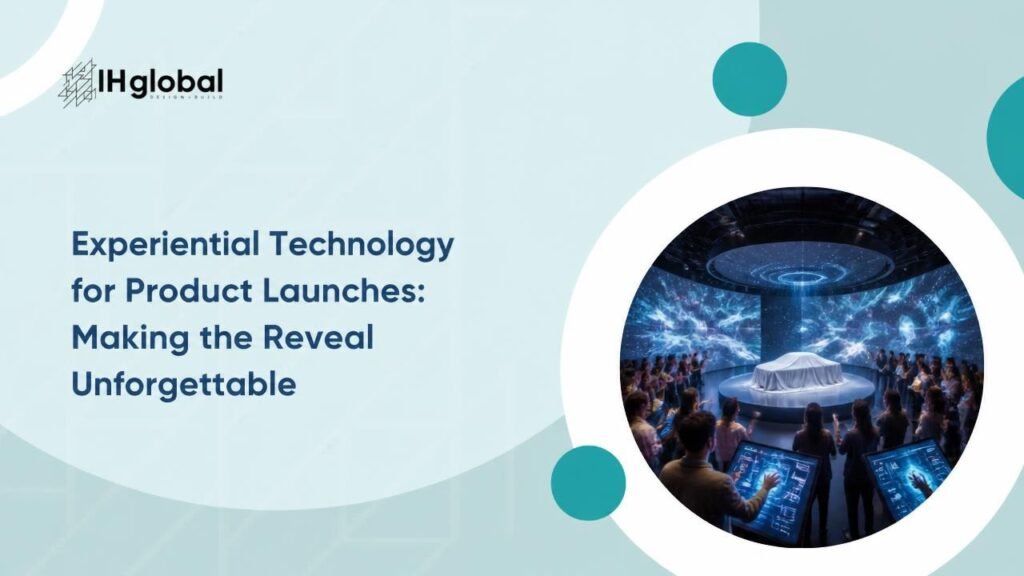
A product launch has only one chance to create its first impression. The reveal needs to communicate what is new while giving the audience a reason to remember the moment after the event is over. That is why experiential technology for product launches is increasingly being used to turn conventional announcements into carefully choreographed experiences.
Projection mapping, holographic displays, kinetic systems, and robotic reveals can make the product the centre of the story rather than simply another object on a stage. The technology, however, works best when it supports the product narrative instead of overshadowing it.
TL;DR
- Product launch technology ideas should begin with the product story, audience, venue, and desired reveal moment.
- Projection mapping can build anticipation by transforming a stage, structure, or product surface into a visual storytelling canvas.
- Robotic product unveiling uses controlled mechanical movement to create a physical reveal that can be synchronised with lighting, sound, and content.
- Holographic product previews can show product details, features, or digital versions before audiences see the physical product.
- Successful technology product unveiling requires early technical planning, custom content, rehearsals, and coordination between creative and production teams.
Why the Reveal Moment Matters More Than Ever
A product launch is no longer limited to presenting specifications from a stage. The reveal itself can become part of the product story, giving audiences a visual and physical moment that communicates the positioning of the product before the detailed presentation even begins.
This is particularly relevant when the product is technical, visually distinctive, or difficult to demonstrate in a conventional format. Experiential technology can help translate features into movement, light, spatial visuals, or interactive demonstrations.
Recent industry commentary on 2026 product launches points toward more experience-driven and technology-enabled formats, with brands combining visual storytelling, interactive media, and physical staging rather than treating the launch as a standalone presentation. EY’s 2026 analysis of experiential marketing in India also reports that 88% of surveyed brands are increasing experiential marketing spending.
The important distinction is that technology should serve the reveal. If the audience remembers the mechanism but not the product, the production has missed its central purpose.
Experiential Technology for Product Launch Reveals
Different technologies create different types of reveal. Projection mapping is primarily visual, robotic systems create physical movement, while holographic displays can introduce a digital or illusion-based version of the product.
IH Global offers experiential technology for product launches including projection mapping, holographic displays, interactive installations, LED/video walls, and kinetic and robotic displays. The right combination depends on the product, venue, audience, and reveal sequence.
Projection Mapping Reveals
Projection mapping can transform a physical object, stage, wall, or product structure into a moving visual canvas. For a launch, the visuals can gradually introduce the product’s story before transitioning into the physical reveal.
For example, a sequence could begin with abstract brand visuals, move into product features, and then reveal the actual product as the projection disappears. This approach can make the transition from anticipation to unveiling feel like one continuous narrative.
IH Global’s projection mapping solutions are designed around the physical surface, projection hardware, venue conditions, and custom 3D content. This coordination is particularly important when the mapped surface is part of the reveal mechanism itself.
Robotic Product Unveiling
Robotic product reveals use programmed mechanical movement to move, rotate, lift, open, or otherwise expose a product at a precisely controlled moment. The physical movement can be synchronised with lighting, audio, LED content, or projection.
This makes robotic product unveiling particularly useful when the product itself has strong visual appeal. A vehicle, industrial machine, consumer appliance, or large-format product can become the centrepiece of a choreographed stage sequence.
IH Global includes kinetic and robotic displays among its experiential technology capabilities, including motion-driven displays and robotic product reveals. Because these systems involve both physical engineering and technology, the mechanism needs to be tested and rehearsed well before the live event.
Holographic Product Previews
Holographic displays can present a product before the audience physically sees it. A digital model can appear to float in space, rotate, enlarge, or reveal internal features that would not be visible on the physical product.
This can be useful when a physical prototype is unavailable, when the product contains complex internal technology, or when the launch needs to explain multiple features before the physical unveiling.
IH Global’s holographic display solutions include hologram fans and Pepper’s Ghost-style displays for product launches and brand experiences. The final effect depends on factors such as lighting, viewing angles, content, and the surrounding physical structure.
Planning Your Product Launch Technology
Technology should be considered during the earliest stages of launch planning. The stage design, product position, audience sightlines, content, lighting, sound, and reveal mechanism all need to work together.
Start by defining the exact role of the technology. Is it building anticipation, explaining the product, creating the reveal itself, or extending the experience after the reveal? This decision helps prevent unnecessary technology from being added simply for visual impact.
A practical planning sequence is:
- Define the reveal: Establish what the audience should see and when.
- Assess the venue: Check ceiling height, stage dimensions, lighting, power, rigging, sightlines, and available space.
- Select the technology: Match projection mapping, robotics, holograms, LED, or interactive systems to the reveal concept.
- Develop content: Produce animations, 3D assets, mapped visuals, and other digital material specifically for the chosen hardware.
- Integrate the systems: Synchronise movement, lighting, sound, visuals, and the physical product.
- Test and rehearse: Run the complete sequence before the event and account for technical contingencies.
IH Global describes a six-stage delivery process covering briefing and strategy, technology selection, content design, fabrication, integration/testing, and live event support. Its experiential technology delivery process is therefore useful as a reference when structuring a technology-led launch.
Budgeting should also include more than hardware. Content production, fabrication, engineering, installation, programming, testing, technical support, transportation, and dismantling can all affect the final cost.
Real Launch Examples
A useful way to think about dramatic product launch ideas is to consider how the technology changes the reveal rather than simply adding another screen.
Projection-led reveal: A product can remain concealed while projection mapping introduces its story, features, or design language. The visuals can then transition directly into the physical reveal.
Robotic reveal: A product can be enclosed within a mechanically controlled structure that opens, rotates, rises, or separates at the exact moment of unveiling. This creates a physical reveal that can be synchronised with the launch soundtrack and stage visuals.
Holographic preview: A digital product model can appear before the physical product, allowing the audience to see different angles, components, or features. The holographic sequence can then transition into the real product reveal.
IH Global’s published experiential technology examples also demonstrate how projection can be used on physical objects, including a 3D model or vehicle, with visuals changing the appearance of the object during the experience. See IH Global’s experiential technology examples for examples of this approach.
These formats can also be combined. For example, a launch could begin with projection mapping, transition into a holographic product preview, and finish with a robotic physical unveiling. The objective is not to use every available technology, but to create a reveal in which each element has a clear role.
Conclusion
The strongest technology product unveiling is not necessarily the most complicated one. It is the one where the technology, product, content, stage design, and timing work together to make the reveal feel intentional.
Projection mapping can build anticipation, robotics can make the physical unveiling dramatic, and holographic displays can introduce a product or its features before the physical reveal. When these systems are planned as part of one narrative, technology becomes part of the product story rather than a separate attraction.
For brands planning a major launch, early technical planning is essential. Defining the reveal sequence, venue requirements, content, engineering, testing, and contingency plans well in advance gives the production team enough time to turn the concept into a reliable live experience.
Frequently Asked Questions
1. What experiential technology works best for a product launch?
The right option depends on the product and reveal concept. Projection mapping suits visual storytelling, robotic systems create physical movement, and holographic displays work well for digital product previews. Several technologies can also be combined into one reveal.
2. How do robotic reveals work for product launches?
Robotic systems use programmed mechanical components to move, lift, rotate, open, or reposition a product at a specific moment. Movement can be synchronised with lighting, sound, LED content, and other stage effects.
3. Can holograms be used to preview a product before it’s physically ready?
Yes. A holographic display can present a digital version of a product, including different angles, features, or components. This can be useful when a physical prototype is unavailable or when the product requires visual explanation.
4. How much does a technology-led product launch cost?
There is no standard cost because budgets depend on technology, scale, content, engineering, venue, installation, and technical support. A simple projection setup and a fully engineered robotic reveal can therefore have very different costs.
5. How far in advance should I plan launch technology?
Complex technology-led launches should be planned well ahead of the event, particularly when custom content, fabrication, robotics, or projection mapping is involved. IH Global recommends engaging at least 10 weeks before an event for complex experiential technology projects.