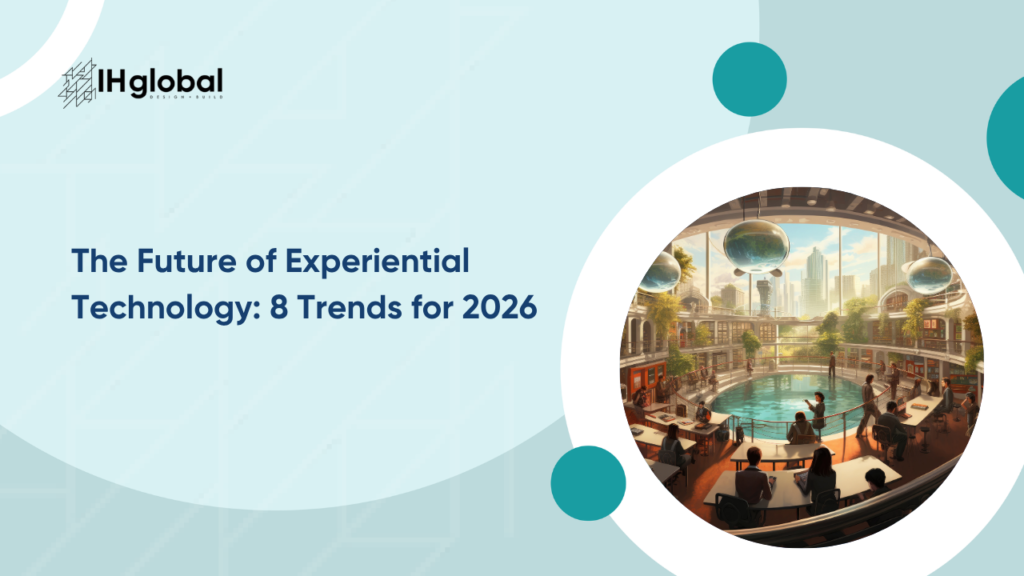
Experiential technology is moving beyond screens and visual spectacle. Brands are increasingly using AI, real-time data, interactive systems, and connected physical environments to create experiences that respond to audiences rather than simply display content.
The future of experiential technology is therefore less about adding more technology and more about making experiences more personalised, measurable, flexible, and useful. Current 2026 event-industry research points to AI, personalisation, data, sustainability, and deeper human engagement as important priorities for events and brand experiences. Cvent’s 2026 event trends highlights operational AI, attendee-led personalisation, first-party data, and experience quality as key developments for 2026.
TL;DR
- AI is moving from experimental content generation towards personalised and responsive physical experiences.
- Physical and digital environments are increasingly being designed as one connected experience rather than separate channels.
- Sustainability is encouraging brands to consider reusable hardware, modular builds, and longer technology lifecycles.
- Data is becoming more important for understanding how audiences interact with experiential installations and proving business value.
- Smaller modular installations and integrated technology-led exhibition stands can make immersive experiences more adaptable across campaigns and venues.
Why Experiential Technology Is Evolving Fast
Audience expectations are changing alongside the technology available to brands. People are accustomed to personalised digital experiences, instant information, interactive interfaces, and content that responds to their behaviour. Physical brand experiences are increasingly expected to provide a similarly relevant and engaging journey.
This is reflected in the broader event technology trends emerging in 2026. Amex GBT’s 2026 Global Meetings and Events Forecast identifies flexibility, productivity, data-driven approaches, technology-enabled attendee experiences, sustainability, and human connection as important priorities for the year. Read the 2026 Global Meetings and Events Forecast.
For experiential technology, this means the focus is shifting from isolated installations towards connected systems. Projection mapping, interactive displays, LED walls, holograms, sensors, AI, and event technology can increasingly work together as part of one visitor journey.
8 Trends Shaping Experiential Technology in 2026
1. AI-Personalised Interactive Experiences
AI is moving into physical environments, allowing experiences to respond to individual visitors rather than presenting identical content to everyone. For example, an interactive installation could adapt its content based on visitor selections, interests, questions, or previous interactions.
Forrester’s 2026 emerging-technology research identifies AI’s movement into the physical world as a significant development, including applications involving physical environments and intelligent systems. Explore IH Global’s interactive installation solutions.
For brands, the important shift is from static interaction to responsive interaction. Instead of simply touching a screen to trigger the same animation, visitors could receive different content or product information based on what they choose.
2. Phygital (Physical + Digital) Convergence
The distinction between physical and digital experiences is becoming less useful. A visitor might interact with a physical product, scan an NFC tag, use a touchscreen, receive personalised content, and continue the interaction through a digital channel.
These phygital experience trends connect physical spaces with digital layers so that the experience does not end when the visitor leaves the venue. IH Global’s experiential technology work includes interactive installations, RFID/NFC systems, digital content, and other technologies that can connect physical visitor journeys with digital interaction. Explore IH Global’s experiential technology solutions.
The opportunity for brands is to design the entire journey rather than treating a booth, event app, website, and follow-up campaign as unrelated touchpoints.
3. Sustainable, Reusable Technology Systems
Sustainability is becoming part of how events and physical experiences are designed. Instead of building single-use installations for every campaign, brands can consider modular structures, reusable technology, adaptable digital content, and components that can be redeployed at different venues.
ISO 20121:2024 provides a framework for managing the social, economic, and environmental impacts of events and applies to events of different types and sizes. See ISO 20121:2024.
For experiential technology, this can translate into longer hardware lifecycles and designs that can be updated rather than completely rebuilt. LED walls, interactive systems, and modular installations can be adapted for different campaigns when planned for reuse. Explore IH Global’s LED and video wall solutions.
4. Data-Driven Experience Design
Experiential technology is increasingly being designed around measurable audience behaviour. Instead of asking only whether visitors liked an installation, brands can examine interactions, content choices, dwell time, lead capture, product interest, and other relevant signals.
Cvent’s 2026 event trends report highlights the growing importance of first-party data as digital attribution becomes more difficult. Read Cvent’s 2026 event trends.
This makes data capture part of experience design rather than something added after an event. An interactive installation, for example, can be designed to capture useful information while still keeping the visitor experience simple and engaging.
5. Contactless & Gesture-First Interaction
Touch-free interaction is becoming another area of development, particularly for public-facing environments where many people may interact with the same installation.
Gesture recognition, motion sensors, RFID/NFC systems, and other contactless interfaces allow visitors to control content without necessarily touching a shared surface. IH Global’s event technology offering includes gesture-control systems and RFID/NFC tracking.
The value is not simply hygiene. Contactless interaction can also make large-format displays, presentations, installations, and high-traffic environments easier to navigate while creating more natural forms of participation.
6. Hybrid Physical-Virtual Events
Hybrid events are continuing to evolve beyond simply livestreaming a physical event. The more interesting development is the integration of physical and virtual participation so that audiences in different locations can interact with the same content or experience.
These event technology trends can include live audience interaction, digital participation, virtual access, real-time content, and connected event systems. Amex GBT’s 2026 forecast identifies technology and flexibility as important components of evolving meetings and events. Explore IH Global’s event technology integration.
For brands, the objective should be to create a coherent experience for both physical and remote audiences rather than treating the virtual audience as an afterthought.
7. Smaller, Modular Installations
Not every immersive experience needs a massive footprint. Smaller modular installations can provide interactive or visual experiences while fitting into exhibition booths, retail environments, corporate spaces, and smaller events.
This direction also supports reuse. A modular interactive wall, holographic display, or compact LED installation can potentially be adapted to different campaigns and venues instead of being designed for one specific location.
IH Global’s holographic display solutions include compact hologram fan formats as well as larger custom holographic experiences, illustrating how the same broad technology category can be adapted to different physical environments.
For brands with multiple activations throughout the year, modularity can therefore become a practical part of the technology strategy rather than simply a cost-saving measure.
8. Technology-Integrated Exhibition Stands as Standard
Technology is increasingly becoming part of the stand architecture rather than an element added after the exhibition design is complete. LED walls, interactive displays, projection mapping, holograms, sensors, and digital content can all be designed into the physical structure.
IH Global’s experiential technology approach combines technology with exhibition stand and physical-environment capabilities, including integrated experiential technology for exhibitions.
This is important because technology often depends on the physical environment around it. Projection mapping requires the right surface, LED walls require appropriate structural integration, and holographic displays depend on lighting and viewing conditions. Designing these elements together can produce a more coherent visitor experience.
What These Trends Mean for Brands Planning Their Next Activation
The immersive brand experience trends emerging in 2026 suggest that brands should begin with the visitor journey rather than selecting technology from a catalogue.
AI may be appropriate when personalisation is important. Gesture control may make sense for high-traffic interactive environments. Projection mapping can transform physical structures, while holographic displays can create distinctive product presentations. The technology should follow the experience objective.
Brands should also think about what happens after the interaction. A visitor’s engagement can potentially become a lead, product-interest signal, digital interaction, or follow-up opportunity when the physical and digital systems are designed together.
Finally, technology planning should consider reuse and scalability. A modular installation that can be adapted across exhibitions, events, retail environments, and corporate spaces may offer more long-term value than a one-off installation designed for a single campaign.
Conclusion
The future of experiential technology is moving towards experiences that are more responsive, connected, measurable, and adaptable. AI personalisation, phygital experiences, sustainable systems, data-driven design, contactless interaction, hybrid participation, modular installations, and integrated exhibition technology are all shaping how brands approach physical experiences in 2026.
The important point is that these trends should not be adopted simply because they are new. The strongest experiences will use technology to solve a clear communication, engagement, or business objective.
For brands planning their next activation, the opportunity is to combine the right technologies into a coherent visitor journey. IH Global’s experiential technology solutions bring together interactive installations, projection mapping, holographic displays, LED/video walls, kinetic experiences, and event technology integration for this type of connected experience.
Frequently Asked Questions
What are the biggest experiential technology trends for 2026?
The major trends include AI-powered personalisation, phygital experiences, reusable technology systems, data-driven design, gesture-based interaction, hybrid events, modular installations, and technology-integrated exhibition stands.
How is AI changing experiential technology?
AI can make physical experiences more responsive by adapting content, recommendations, or interactions to visitor behaviour. The shift is from delivering the same experience to everyone towards more personalised and context-aware interactions.
What is phygital experience design?
Phygital experience design combines physical and digital touchpoints into one connected visitor journey. It can include physical products, interactive displays, QR or NFC interactions, digital content, sensors, and online follow-up.
Are experiential technology installations becoming more sustainable?
Sustainability is increasingly influencing event and experience design. Reusable hardware, modular structures, adaptable content, and longer technology lifecycles can reduce the need to rebuild experiences for every campaign.
How should brands prepare for these experiential technology trends?
Start with the audience journey and business objective, then select the technologies that support them. Brands should also consider data, reuse, scalability, integration, accessibility, and technical reliability before investing in an installation.