TL;DR
- Immersive technology means digital tools that mix real and virtual worlds to create interactive and realistic experiences used in learning, business, gaming, and training across many industries today.
- The main types include VR, AR, MR, XR, 360-degree content, and haptic technology. Each type gives different levels of interaction, from simple overlays to fully virtual environments.
- Businesses use immersive technology to improve training, customer experience, product design, and communication. It helps people understand complex ideas in a simple and visual way.
- future of immersive technology is growing fast with AI, better devices, and wider adoption. It will become a key part of education, healthcare, retail, and digital business systems.
Introduction
Immersive technology is a digital way of mixing real and virtual worlds to create interactive and engaging experiences. It helps people see, learn, and interact with digital content in a simple and realistic way.
This technology is becoming very popular in education, business, healthcare, gaming, and many other industries.
In this blog, we will understand what immersive technology is, its definition, types, examples, and how it works in real life. We will also explore immersive technology benefits, immersive technology in business, future of immersive technology, and immersive technology market 2026 trends.
This guide will help you learn everything in very simple English, even if you are a beginner.
What Is Immersive Technology?
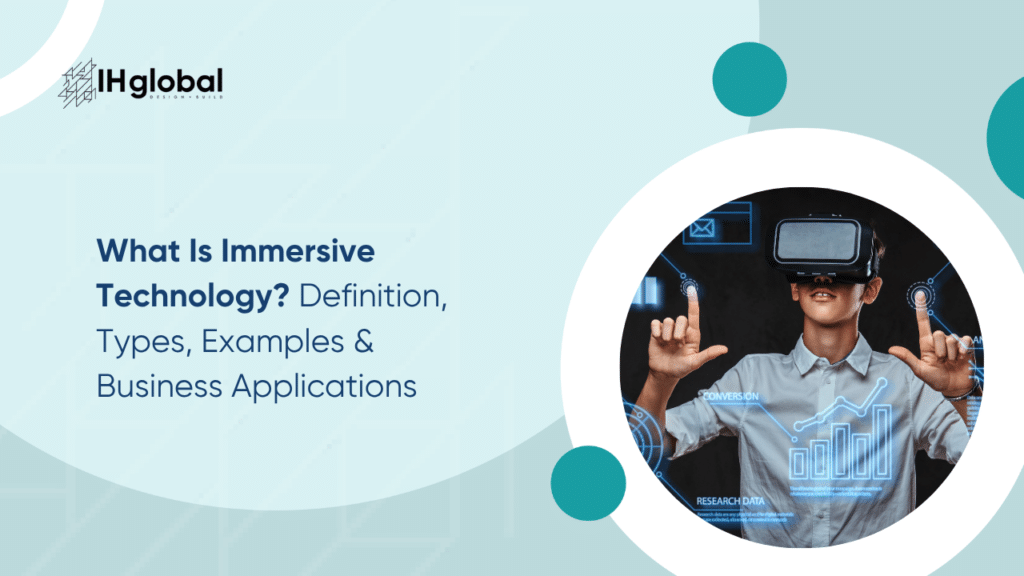
Immersive technology is a type of digital system that creates a realistic experience by blending physical and virtual environments. It allows users to see, interact, and experience digital content in a more natural and engaging way.
It includes tools like VR, AR, MR, and XR that help people interact with digital spaces. These technologies are widely used in training, education, entertainment, and business to make experiences more interactive and easy to understand.
The Science Behind Immersive Technology
Immersive technology works based on human senses like sight, sound, and touch. It uses computers, sensors, and software to create environments that feel real. The brain then reacts to these signals as if they are real experiences.
This science is based on how humans perceive reality. When digital information matches real-world signals, the brain accepts it as real. This is why immersive experiences feel so natural and engaging for users.
Types of Immersive Technology
Immersive technology includes different methods that help people experience digital content in a more real and interactive way. These technologies combine real and virtual environments to make learning, gaming, training, and business activities more engaging and easy to understand.
Each type of immersive technology works differently, but all aim to improve user experience by making digital interaction feel natural and realistic.
Virtual Reality (VR)
Virtual Reality is a technology that creates a completely digital world where users can enter using a VR headset. It replaces the real world with a simulated environment, allowing users to feel like they are physically present in another place.
VR is widely used in training, education, and gaming.
For example, pilots can practice flying in a safe virtual cockpit, and gamers can explore fully interactive digital worlds where they can move and interact like real life.
Augmented Reality (AR)
Augmented Reality adds digital elements to the real world using devices like smartphones or AR glasses. It does not remove the real environment but enhances it by placing virtual objects on top of what the user sees.
For example, AR is used in shopping apps where users can see how a sofa looks in their room before buying it. It is also used in education where students can view 3D models directly in their surroundings.
Mixed Reality (MR)
Mixed Reality combines real and digital worlds in a way that both can interact with each other. Unlike AR, digital objects in MR can respond to real-world actions, making the experience more advanced and interactive.
For example, engineers can place virtual machines on real tables and interact with them. Doctors also use MR for medical training where virtual organs can be studied in real environments.
Extended Reality (XR)
Extended Reality is a combination of VR, AR, and MR. It brings all immersive technologies together into one system, allowing users to experience different levels of digital interaction based on need and usage.
For example, companies use XR for training where employees can switch between virtual environments, augmented instructions, and mixed interactions in a single platform for better learning and understanding.
360-Degree Content
360-degree content allows users to look in every direction inside a digital environment. It creates a feeling of being physically present in a place and gives a complete view of the surroundings through digital devices.
For example, users can explore hotels, tourist destinations, or event spaces online and look around freely as if they are actually standing there in real life.
Haptic Technology
Haptic technology adds the sense of touch to digital experiences. It uses vibrations or feedback signals to make users feel interactions inside virtual environments, making the experience more realistic and engaging.
For example, in VR gaming, users can feel vibrations when they hit or touch virtual objects, making the digital experience feel closer to real-world physical actions.
| Technology | Meaning | Device Used | Example | Immersion Level |
| VR | Fully virtual world | Headset | VR games, pilot training | Very High |
| AR | Digital + real world mix | Mobile, AR glasses | Furniture preview apps | Medium |
| MR | Real and digital interaction | Smart devices | Medical training, engineering design | High |
| XR | Combination of VR, AR, MR | Multiple devices | Corporate training systems | Flexible |
How Immersive Technology Works — The Tech Stack
Immersive technology works using a combination of hardware, software, and smart digital systems. These tools work together to create real-time interactive experiences where users can see, hear, and sometimes even feel digital environments as if they are real.
Below are the bullet points that explain the main parts of how immersive technology works in a very simple way.
- Devices capture user movement, voice, and surroundings
- Software processes this data in real time
- Digital environments are created using 3D graphics
- Output is shown through headsets, screens, or mobile devices
- Sensors help track motion and interaction accurately
These systems rely on fast processing and advanced graphics to make the experience smooth and realistic. When a user moves or interacts, the system instantly updates the digital environment to match real-world actions.
For example, in VR, headsets track head movement to change the view instantly. In AR, a phone camera detects surroundings and places digital objects correctly in real space, making the experience feel natural and responsive.
10 Real-World Examples of Immersive Technology
Immersive technology is used in many real-life situations to make learning, shopping, training, and entertainment more interactive and easy to understand.
Below are some real-world examples that show how immersive technology is used in daily life across different industries in a simple way.
- Virtual Reality Gaming
Virtual reality gaming allows users to enter a fully digital world using a VR headset. It replaces the real world with a virtual environment where users can move, explore, and interact with objects, making the experience feel real and highly engaging. - AR Shopping Experience
AR shopping lets users see products like furniture, clothes, or home items in their real environment using a mobile camera. It helps people understand how products will look before buying, making shopping easier and more confident. - Medical Training Simulations
Doctors and medical students use immersive simulations to practice surgeries in a safe virtual environment. This helps them learn complex procedures without risk to real patients and improves their skills through repeated practice. - 360-Degree Virtual Tours
360-degree virtual tours allow users to explore places like hotels, homes, or tourist locations online. Users can look in every direction, making it feel like they are physically present in that place. - Flight Simulation Training
Flight simulators help pilots practice flying in a safe digital environment. They can learn takeoff, landing, and emergency handling without using real aircraft, which improves safety and training quality. - AR Navigation Systems
AR navigation shows digital directions on real roads using a mobile screen. It helps users easily understand routes while walking or driving in unknown places, making travel simpler and faster. - Virtual Classrooms
Virtual classrooms use immersive tools like 3D visuals and interactive learning spaces. Students can attend classes online in a more engaging way, which makes learning easier and more interesting. - Retail Product Visualization
This allows customers to see how products will look in their home before buying. For example, they can place virtual furniture in their room using AR to check size and style. - Industrial Training Systems
Companies use immersive simulations to train workers on machines and safety rules. This helps employees learn practical skills safely without real-world risks. - Virtual Events and Concerts
People can attend concerts or events using VR from home. They can enjoy live performances in a digital environment that feels close to real-life experience.
Benefits of Immersive Technologies for Businesses
Immersive technology helps businesses improve how they work, train people, and connect with customers. It makes complex ideas easy to understand using virtual and interactive experiences. This leads to better decisions, faster learning, and stronger customer engagement in a simple and effective way.
Below are some key benefits of immersive technologies for businesses.
- Improves customer engagement through interactive experiences
- Makes employee training safer and easier using simulations
- Reduces business costs by removing the need for physical setups
- Helps customers understand products better before buying
- Strengthens marketing by creating memorable brand experiences
- Improves decision-making with clear visual understanding of data
These benefits show that immersive technology is not just for entertainment, but also a powerful tool for modern businesses. It helps companies grow faster, improve performance, and deliver better experiences to both employees and customers in a simple and effective way.
Immersive tech hardware will hit $89.6B by 2030 (26.3% CAGR), while software outpaces it with a 29.2% CAGR growth
Immersive Technology Across Industries
Immersive technology is used in many industries to make work easier, faster, and more interactive. It helps businesses and organizations explain complex ideas in a simple way using virtual and digital experiences.
Different industries use it for training, learning, design, customer experience, and better decision-making.
It is becoming an important part of modern business applications because it improves understanding and reduces real-world risks. From education to healthcare and retail to manufacturing, immersive technology is changing how industries operate and deliver value.
- Healthcare Industry
Doctors use immersive technology for surgery training and medical simulations. It helps them practice safely and improve skills without risk to real patients, making healthcare training more effective and accurate. - Education Industry
Schools and universities use immersive tools to create virtual classrooms and 3D learning experiences. Students understand difficult topics easily through visual and interactive content instead of only reading textbooks. - Retail and E-Commerce
Retail businesses use immersive technology to let customers try products virtually. For example, users can see how furniture or clothes will look before buying, improving confidence in purchase decisions. - Real Estate Industry
Real estate companies use virtual tours to show houses and buildings online. Buyers can explore properties from anywhere, which saves time and makes property selection easier. - Manufacturing and Engineering
Industries use immersive simulations for product design and machine training. Engineers can test ideas virtually before building real models, reducing cost and improving safety. - Entertainment and Media Industry
Gaming, movies, and live events use immersive technology to create engaging experiences. Users can interact with digital environments, making entertainment more exciting and realistic.
Overall, immersive technology is helping every industry improve its business applications by making processes more interactive, safe, and efficient while giving users a better and more realistic experience.
Challenges and Limitations
Immersive technology is very powerful, but it also has some challenges and limitations. These issues can affect how easily businesses and users adopt and use it in daily life. Even though it improves experiences, it still needs better accessibility, lower costs, and more awareness to become widely used everywhere.
Below are some common challenges and limitations of immersive technology.
- High Cost of Setup
Immersive technology systems like VR and AR devices can be expensive. Many small businesses find it difficult to invest in hardware, software, and development tools needed to build immersive experiences. - Technical Complexity
These technologies require advanced technical knowledge to build and maintain. Not all companies have skilled professionals, which makes implementation difficult and time-consuming. - Hardware Requirements
Immersive experiences often need special devices like headsets, sensors, or high-performance systems. This limits access for users who do not have advanced equipment. - User Adaptation Issues
Some users find it difficult to understand or adapt to immersive systems at first. It takes time for people to get comfortable with virtual and interactive environments. - Performance and Speed Limitations
Immersive applications require strong internet and processing power. Slow systems can reduce the quality of experience and make interactions less smooth.
Overall, while immersive technology offers many benefits, these challenges need to be improved so that more people and businesses can use it easily in the future.
The Future of Immersive Technology
The future of immersive technology is very promising as more industries are starting to use it for learning, business, healthcare, and entertainment. It is expected that immersive tools like VR, AR, MR, and XR will become more common in daily life and will change how people interact with digital content in a simple and natural way.
In the future of immersive technology, we will see more advanced systems that are faster, smarter, and easier to use. Devices will become lighter and more affordable, making them accessible to more users. This will help schools, hospitals, and businesses adopt immersive solutions without difficulty.
The Asia-Pacific (APAC) immersive technology market is projected to grow from USD 18,227 Million in 2025 to USD 117,880 Million by 2034.
How IHGlobal Delivers Immersive Experiences
IHGlobal creates immersive experiences by using modern immersive technology to connect real and digital worlds. It designs interactive solutions that help people learn, explore, and engage in a simple and meaningful way.
These experiences are built to make communication more visual, easy, and impactful for users across different industries.
With the help of advanced tools like AR, VR, MR, and XR, IHGlobal builds experiences that are smooth, interactive, and user-friendly. It focuses on making complex ideas easy to understand through real-time visuals, storytelling, and digital environments that feel natural and engaging.
The growth of the immersive technology market 2026 shows that demand for such experiences will continue to rise across industries. IHGlobal helps businesses stay ready for this future by building strong, scalable, and engaging immersive solutions.
For businesses looking to adopt next-generation immersive experiences, IHGlobal delivers practical and creative solutions that match modern digital needs.
Frequently Asked Questions
What is immersive technology in simple terms?
Immersive technology is a digital system that mixes real and virtual worlds to create interactive experiences. It helps users see and interact with digital content in a more engaging and realistic way across education, business, and entertainment industries.
What are the main types of immersive technology?
The main types include Virtual Reality, Augmented Reality, Mixed Reality, and Extended Reality. These technologies offer different levels of interaction, from fully virtual environments to real-world digital overlays and combined experiences.
What is the difference between VR, AR, MR, and XR?
VR creates a fully digital world, AR adds digital objects to the real world, MR combines both real and digital interaction, and XR includes all immersive technologies together in one system.
How is immersive technology used in real life?
It is used in gaming, education, healthcare, retail, and business. People use it for training, virtual tours, simulations, and interactive learning experiences that make complex ideas easier to understand.
What industries use immersive technology the most?
Industries like healthcare, education, retail, real estate, and manufacturing use immersive technology the most. They use it for training, visualization, product design, and customer engagement.
How does immersive technology improve employee training?
It improves training by providing real-like simulations. Employees can practice skills in a safe environment, which helps them learn faster and reduce mistakes compared to traditional training methods.
What is the market size of immersive technology in 2025?
The immersive technology market is growing rapidly due to demand in education, healthcare, and business sectors. It is expected to expand significantly as more companies adopt AR, VR, MR, and XR solutions.
What are the biggest challenges of using immersive technology?
The biggest challenges include high setup cost, technical complexity, and hardware requirements. However, improvements in technology are making it more affordable and easier to use for businesses.
Is immersive technology the same as the Metaverse?
No, immersive technology includes tools like AR, VR, MR, and XR, while the Metaverse is a larger digital ecosystem built using these technologies to connect virtual spaces.
How can businesses start using immersive technology?
Businesses can start by using AR apps, VR training tools, or virtual product demos. Many companies also partner with immersive solution providers to build custom experiences.
What does the future of immersive technology look like?
The future includes AI integration, better XR systems, and wider use across industries. It will become more realistic, affordable, and part of everyday digital experiences.
Can immersive technology be used at trade shows and exhibitions?
Yes, it is widely used in trade shows for VR demos, AR displays, and interactive booths. It helps brands attract visitors and create memorable experiences during events.