TL;DR
- Environmental Graphic Design (EGD) combines architecture, branding, and visual communication to improve navigation, strengthen brand identity, and create engaging physical spaces in offices, airports, hospitals, and experience centres.• Businesses invest in environmental graphics to enhance user experience, simplify wayfinding, and build memorable brand interactions through signage, digital displays, lighting, and immersive spatial storytelling.
Imagine walking into a massive, multi-level international airport: without clear signage, floor markings, or colour-coded zones, you would feel instantly overwhelmed. This is exactly where Environmental Graphic Design (EGD) steps in to solve the puzzle.
According to the Society for Experiential Graphic Design (SEGD) — the global authority on the discipline — humans process visual information 60,000 times faster than text. This is why EGD is so vital. It is a multidisciplinary field merging architecture and graphic communication to transform “empty spaces” into intuitive “places.”
It is not just about putting a logo on a wall; it is about telling a coherent story within a physical space — one that guides, informs, and emotionally connects every visitor the moment they step through the door.
What Is Environmental Graphic Design?
At its core, environmental graphic design is the art of using visual elements to help people connect with the places they inhabit. It transforms a static “space” into a meaningful “place.”
While traditional graphic design lives on screens or paper, EGD lives in the three-dimensional world. So, what does environmental graphic design cover in practice?
- It is a broad spectrum that includes everything from the signage that tells you where the restroom is, to the massive digital installations that greet you in a tech firm’s lobby.
- It bridges the gap between the building and the person, ensuring that the architecture “speaks” to the visitor in a language that is immediate and intuitive.
Why Is Environmental Graphic Design Important in Modern Spaces?
In an era where digital experiences often overshadow physical ones, the quality of a brick-and-mortar environment matters more than ever. Environmental graphics play a crucial role in creating a sense of identity and belonging.
Modern spaces are often large and intimidating. Without proper environmental design, a hospital can feel like a labyrinth or a corporate headquarters can feel sterile and disconnected from its people.
EGD injects personality and functionality into these structures. It serves as the “connective tissue” that makes a high-traffic area feel organised and intentional.
For businesses participating in large-scale events, integrating these elements into a professional booth design is essential to stand out amidst the visual noise of a crowded exhibition hall.
How Does Environmental Graphic Design Improve User Experience?
The primary goal of any environmental design studio is to solve real-world problems. The most common challenge in any physical space is navigation.
- Wayfinding: This is the most functional aspect of EGD. It involves signs, maps, and symbols that guide people through a space without frustration.
- Informational Design: This tells the user what they are looking at — whether it is a museum exhibit or a directory in an office building.
- Emotional Connection: Good design evokes a feeling. Vibrant colours in a paediatric ward or sleek, minimalist graphics in a luxury hotel influence how a user perceives the brand and the space.
When a space is easy to navigate and aesthetically pleasing, user stress decreases and satisfaction increases.
This is particularly vital in high-pressure environments like international trade shows, where understanding the different types of exhibition stalls can help a brand choose the right layout to complement its visual strategy.
What Are the Main Elements of Environmental Graphic Design?
To create a cohesive experience, designers rely on several key components:
- Typography: Large-scale lettering that is legible from a distance but fits the architectural style.
- Colour Theory: Using colour to define different “zones” within a large building.
- Materiality: Choosing the right textures — glass, wood, or LED screens — to convey a specific brand message.
- Lighting: Using light to highlight environmental graphics and create focal points.
- Digital Integration: Incorporating interactive screens that respond to user movement.
Why Are Businesses Investing in Environmental Graphic Design?
Forward-thinking companies understand that their physical office or retail outlet is a powerful marketing tool. Investing in environmental graphics is an investment in brand equity. It communicates a company’s values and culture to both employees and clients alike.
Beyond the office, this investment extends to temporary environments. For example, brands often seek exhibition stall design ideas and tips to ensure their presence at industry events reflects their premium positioning.
When your physical space aligns with your brand identity, it builds trust and leaves a lasting impression that a digital advertisement simply cannot replicate.
How Do Experience Centres Use Environmental Graphic Design?
Experience centres are perhaps the ultimate application of environmental graphics. These are specialised spaces designed to immerse a visitor in a brand’s story — unlike a traditional showroom, they use sensory design to engage the visitor on multiple levels.
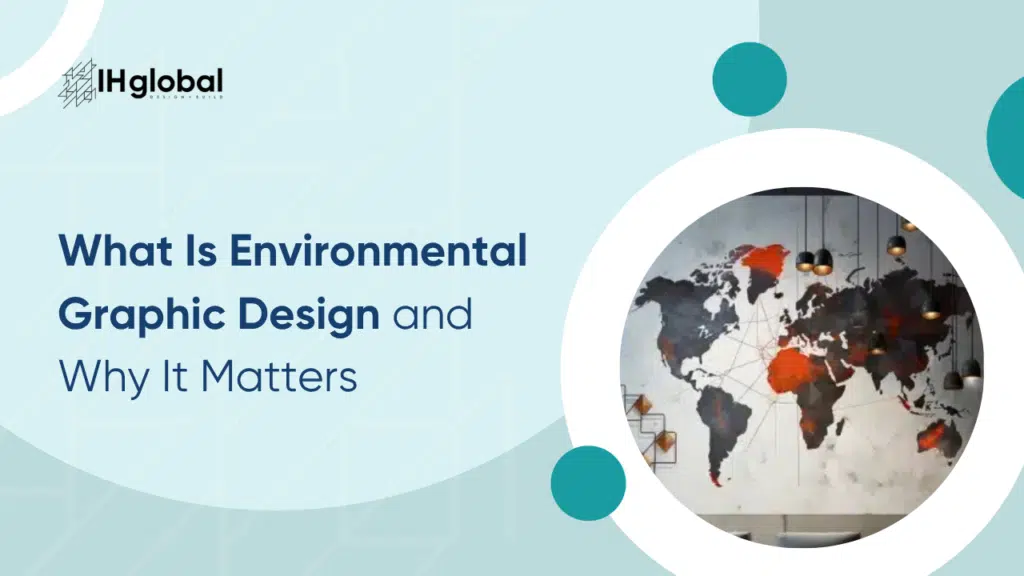
In these hubs, environmental graphics are used to create “walk-through” narratives. Large-scale murals, interactive timelines, and floor graphics lead the visitor through a curated brand journey.
If you are building or upgrading a corporate experience space, explore 15 ways IH Global can help you create a world-class experience centre for a comprehensive blueprint on integrating technology with physical design.
Conclusion
Environmental graphic design is much more than decoration; it is a vital communication tool that shapes our daily interactions with the world around us. From the subtle cues that lead us to our destination to the bold visual statements that define a brand’s culture, environmental graphics make our environments more functional, beautiful, and ultimately more human.
Are you planning your next office redesign, experience centre build, or trade show booth? At IH Global, we specialise in transforming static environments into dynamic brand experiences. Partner with a trusted exhibit partner today and start building a space that speaks for itself.
Frequently Asked Questions
Who provides comprehensive environmental graphic design solutions?
Many firms offer environmental graphic design services, but B2B businesses typically look for companies that manage everything from concept development and branding to fabrication and on-site installation. IH Global delivers complete environmental graphic design solutions tailored for offices, experience centres, retail spaces, and commercial environments — with end-to-end project management to ensure seamless execution.
How to choose the right environmental graphics firm?
Choose a firm with demonstrated experience in branding, spatial design, material selection, and large-scale execution. Review their portfolio for past projects similar to yours, and verify they offer installation support. IH Global combines creative design expertise with end-to-end project management for corporate and exhibition environments across India and internationally.
What are the latest materials and products used in environmental graphics for offices?
Modern office environmental graphics often incorporate acrylic signage, digital display walls, vinyl graphics, LED elements, sustainable materials, modular branding systems, and interactive installations. IH Global uses innovative materials and contemporary display solutions to create visually engaging office and customer experience environments.
Which service providers specialise in sustainable environmental graphics solutions?
Companies specialising in sustainable environmental graphics focus on eco-friendly materials, recyclable substrates, energy-efficient lighting, and low-impact production methods. IH Global offers sustainable environmental graphic solutions designed to support modern branding requirements while reducing environmental impact.
How much do environmental graphics installations typically cost?
Environmental graphic installation costs vary depending on project size, materials, customisation requirements, technology integration, and installation complexity. Small office signage projects have a lower investment threshold, while large corporate headquarters or experience centre installations require a higher budget. Contact IH Global for a project-specific consultation and customised pricing based on your exact business requirements.