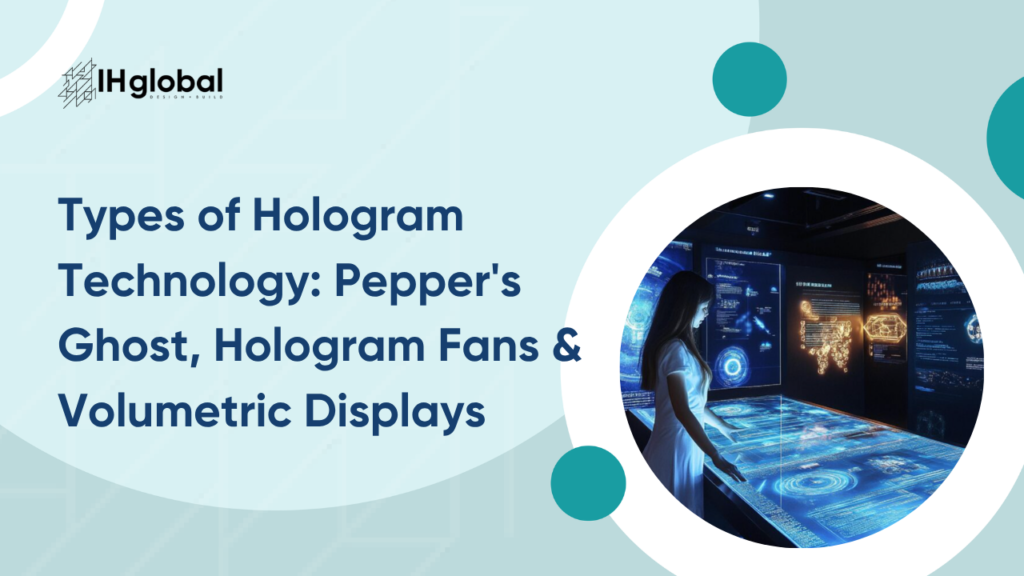
Hologram technology has become a popular part of events, exhibitions, product launches, retail displays, and brand experiences. But the term “hologram” covers several different technologies that create three-dimensional or floating visual effects in different ways.
Pepper’s Ghost uses reflection to create a stage illusion, while hologram fan displays use rapidly rotating LED blades. Volumetric displays take a different approach by creating visible imagery within a physical volume of space.
Understanding these differences can help brands choose the right technology for their venue, content, audience, and budget.
TL;DR
- Pepper’s Ghost creates a large-scale floating-image illusion using reflection.
- Hologram fans create floating visuals using rapidly rotating LED blades.
- Volumetric displays create imagery within a three-dimensional viewing volume.
- The right choice depends on the venue, content, viewing conditions, and audience experience.
- Commercial hologram solutions can be used for launches, exhibitions, corporate events, retail, and brand activations.
What Is Hologram Technology?
“Hologram” is commonly used to describe displays that make digital content appear three-dimensional or suspended in space. However, many commercial hologram systems use optical illusions or specialised display technologies rather than traditional holography.
For events and brand experiences, this distinction is useful because different systems produce different viewing experiences.
A Pepper’s Ghost installation can make a life-size person appear on a stage. A hologram fan display can make a product or logo appear to float in mid-air. A volumetric display can create illuminated imagery within a physical volume that can be viewed from multiple directions.
The best option therefore depends less on the label “hologram” and more on what the audience needs to see and how the installation will be used.
Pepper’s Ghost Illusion
Pepper’s Ghost technology is one of the most established methods for creating a hologram-like stage effect.
It uses a transparent film, glass, or similar surface positioned at an angle. Bright imagery from a screen or projector is reflected toward the audience, while the transparent surface is made difficult to see under controlled lighting. The reflection appears to float within the surrounding environment.
The technique is particularly effective for large-scale presentations. A digital presenter, performer, product animation, or character can appear to share the stage with physical people and objects.
Where Pepper’s Ghost Works Best
Pepper’s Ghost is commonly suited to:
- Product launches
- Corporate events
- Stage performances
- Brand presentations
- Museum installations
- Virtual presenters and digital characters
Its main strength is scale and visual impact. However, lighting, viewing angles, projector or screen placement, and the physical stage setup all need to be carefully planned.
For brands looking for a dramatic stage presentation, IH Global’s holographic display services include Pepper’s Ghost stage illusions alongside other holographic formats.
Hologram Fan Displays
A hologram fan display uses rapidly rotating blades fitted with LEDs. As the blades rotate, the LEDs switch on and off in precise patterns. Persistence of vision makes the sequence appear as a continuous floating image.
Unlike a large Pepper’s Ghost installation, a hologram fan is relatively compact. This makes it suitable for spaces where a brand wants a noticeable visual without requiring a full stage setup.
Where Hologram Fans Work Best
Hologram fan displays can be used for:
- Exhibition booths
- Retail spaces
- Product showcases
- Brand activations
- Corporate displays
- Event entrances
They work particularly well for logos, products, short animations, and promotional visuals.
The installation still needs to account for viewing position, ambient lighting, safety, and the placement of the physical fan hardware. For exhibitions where space is limited, however, the compact format can be useful.
Volumetric Displays
A volumetric display creates visual information within a defined three-dimensional volume rather than simply reflecting an image from a surface.
Different systems use different techniques, including rotating components, light-scattering media, lasers, or other optical methods. The result is imagery that occupies physical space and can potentially be viewed from multiple directions.
This makes volumetric technology different from both Pepper’s Ghost and hologram fans. Those systems create the appearance of depth, while volumetric displays can generate visible points at different positions within a physical volume.
Where Volumetric Displays Work Best
Volumetric technology can be considered for:
- Advanced product visualisation
- Museums
- Educational installations
- Scientific applications
- Specialised brand experiences
- Research and visualisation environments
The technology can also be more technically demanding. Resolution, brightness, viewing volume, colour, and the mechanism used to generate the image all affect the final experience.
Comparing the Three: Which Type Should You Use?
There is no single best hologram technology for every application.
| Technology | How it works | Suitable for |
| Pepper’s Ghost | Reflects imagery from a screen or projector onto an angled transparent surface | Large stages, launches, performances |
| Hologram Fan | Uses rapidly rotating LED blades to create a floating image | Exhibitions, retail, product displays |
| Volumetric Display | Generates visible imagery within a physical volume | Advanced visualisation and specialised installations |
For a large corporate event or product launch, Pepper’s Ghost can create a dramatic, life-size stage experience.
For an exhibition stand or retail environment, a hologram fan can provide an attention-grabbing display while taking up relatively little space.
Where multi-angle, three-dimensional viewing is a central requirement, a volumetric display may be more appropriate.
The decision should consider venue size, ambient lighting, viewing distance, content type, installation requirements, and budget rather than simply choosing the technology that looks most futuristic.
Real-World Applications by Hologram Type
Corporate Events
Pepper’s Ghost can present a virtual speaker, executive, performer, or digital character on stage. It can also be combined with physical presenters and other event technology.
Product Launches
Holographic displays can make a product reveal more visual and interactive. Pepper’s Ghost works well for large-scale reveals, while hologram fans can highlight products in exhibition and retail environments.
Exhibitions
Hologram fans can attract attention to exhibition stands by displaying products, logos, animations, and other short-form visual content in a compact footprint.
For more immersive exhibition experiences, holographic displays can also be integrated with interactive installation design.
Museums and Education
Museums can use hologram-style displays to present historical figures, objects, environments, and educational content. Volumetric systems can be considered when three-dimensional viewing from multiple directions is important.
Retail and Showrooms
Compact holographic displays can create distinctive product presentation areas in retail spaces and showrooms. They can also be combined with lighting, physical displays, and other experiential technology.
Conclusion
The different types of hologram technology are designed for different experiences.
Pepper’s Ghost technology is well suited to large-scale stage presentations and dramatic reveals. Hologram fan displays offer a compact format for exhibitions, retail, and product displays. Volumetric displays provide a more spatial approach for specialised three-dimensional visualisation.
The right choice depends on the venue, audience, content, viewing conditions, and intended experience. Brands should assess these factors before selecting a system rather than choosing a technology based only on the word “hologram.”
For businesses planning a holographic activation, IH Global’s holographic display solutions cover Pepper’s Ghost, hologram fans, and volumetric-style displays, with the format selected according to the project’s requirements.
FAQS
What are the different types of hologram technology?
Common commercial hologram technologies include Pepper’s Ghost systems, hologram fan displays, and volumetric displays. Each uses a different method to create a three-dimensional or floating visual effect.
What is Pepper’s Ghost technology?
Pepper’s Ghost is an optical illusion that reflects bright imagery from a screen or projector onto an angled transparent surface. The reflection appears to float within the surrounding environment.
How does a hologram fan display work?
A hologram fan uses rapidly rotating LED blades. Precisely timed LEDs create a sequence of light that the eye perceives as a continuous floating image.
What is a volumetric display?
A volumetric display generates visible imagery within a three-dimensional volume rather than only on a flat surface. Depending on the technology, this can involve rotating components, lasers, or light-scattering methods.
Which hologram technology is best for exhibitions?
It depends on the exhibition objective and available space. Hologram fans are useful for compact product and brand displays, while Pepper’s Ghost can be considered for larger, more immersive presentations. Lighting, viewing distance, content, and installation requirements should also be assessed.
Is a true 3D hologram possible with today’s technology?
Advanced holographic display technologies do exist, but most commercial systems marketed as “holograms” use methods such as Pepper’s Ghost, LED fans, projection, or other display techniques. True holographic systems remain technically demanding and are not yet the standard solution for most commercial event applications.