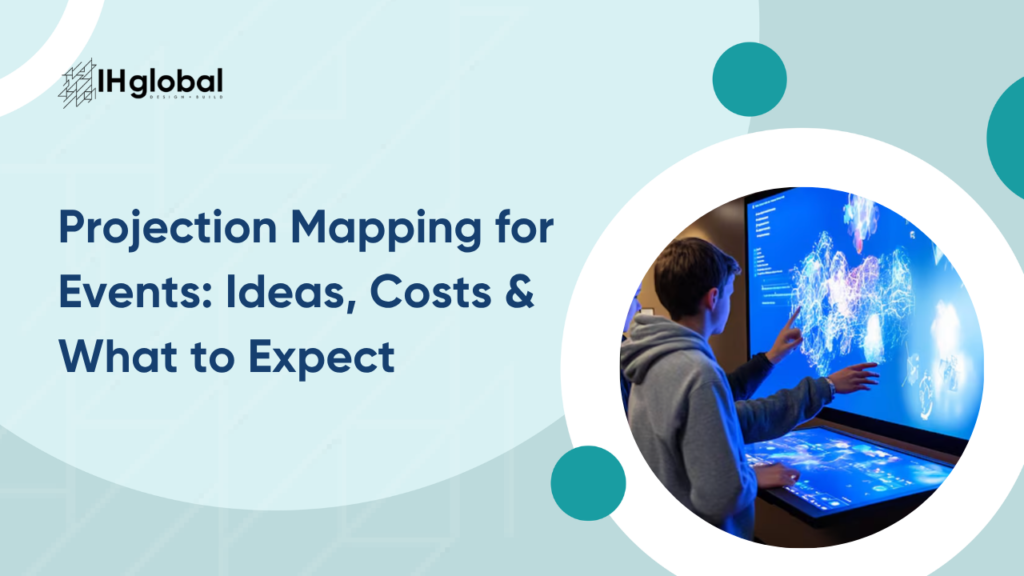
Projection mapping for events can transform stages, products, exhibition structures, walls, and even building facades into dynamic visual experiences. Instead of displaying content on a conventional flat screen, projection mapping fits digital visuals to the shape and dimensions of a physical surface.
Brands use it for product launches, corporate events, exhibitions, stage shows, brand activations, and immersive experiences. The final setup depends on factors such as the surface, projector requirements, content complexity, venue conditions, and technical support.
This guide covers practical projection mapping ideas, projection mapping cost in India, planning timelines, and what to consider when choosing a projection mapping partner.
TL;DR
- Projection mapping can turn stages, products, walls, and buildings into immersive event experiences.
- Product launches, corporate events, exhibitions, brand activations, and live shows are common applications.
- Projection mapping cost in India varies widely based on the surface, projectors, content, venue, and technical requirements.
- Start planning several weeks in advance to allow time for content creation, technical setup, testing, and rehearsal.
- A reliable projection mapping partner should handle both creative production and technical execution from concept to live event.
Why Brands Use Projection Mapping at Events
Projection mapping allows the physical environment to become part of an event’s visual story.
A stage can change appearance between different segments of an event, while a product can become the centre of a visual reveal. Exhibition structures can also be transformed into animated displays without changing their physical construction.
For corporate events, projection mapping can help communicate company milestones, brand stories, product information, or future plans through visuals designed around the physical space.
It can also create a more immersive environment by extending visuals beyond a traditional screen. When combined with other technologies, experiential technology solutions can bring projection, interactive installations, holographic displays, and other elements together as part of one event experience.
8 Projection Mapping Ideas for Your Next Event
The most effective projection mapping ideas are built around the purpose of the event. Here are eight ways brands can use projection mapping.
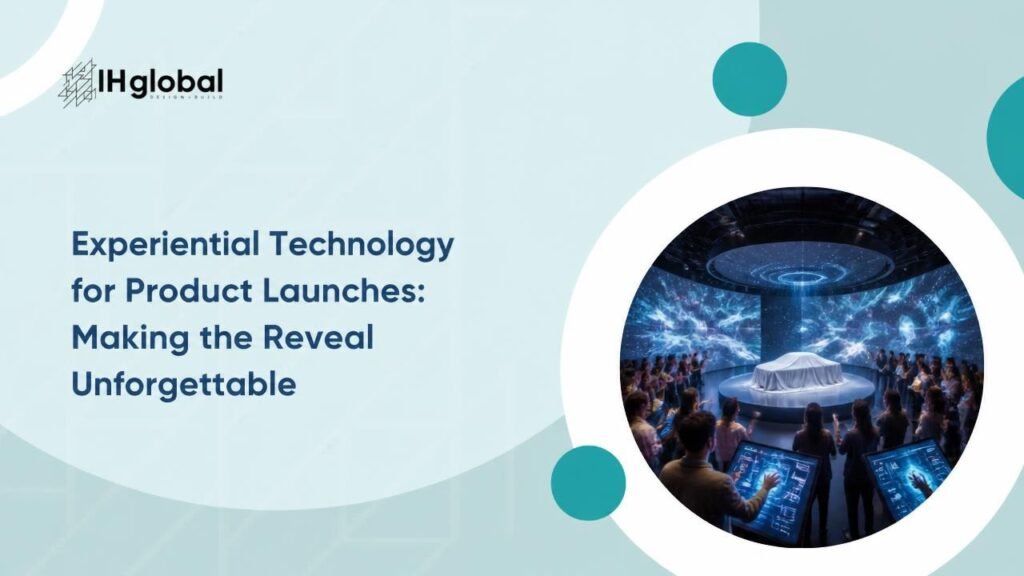
1. Product Reveal
Projection can build anticipation before a product is physically revealed. Visuals can introduce the product, highlight its features, or create a countdown leading to the reveal.
This makes product launch projection mapping particularly useful when the launch is designed around a dramatic stage moment.
2. Stage Transformation
A single stage can take on different visual identities throughout an event. Projection can change the background, colours, graphics, and atmosphere between presentations, awards, entertainment, and other segments.
3. Corporate Storytelling
Corporate event projection mapping can turn company history, milestones, achievements, or future plans into a visual narrative.
For example, a company could use mapped visuals to show its growth from its founding to its current operations.
4. Exhibition Stand Mapping
Projection mapping can make an exhibition stand more dynamic by turning walls or product displays into changing visual surfaces.
Different visuals can be presented at different times without requiring multiple physical backdrops.
5. Immersive Brand Experiences
Projection does not have to remain limited to a stage. Multiple surfaces can be mapped together to create an immersive environment around visitors.
This approach can work for exhibitions, brand activations, experiential zones, and themed installations.
6. Opening Ceremony
An opening sequence can use projection to introduce an event, brand, venue, sponsor, or central theme.
Instead of beginning with a static screen, the physical stage or architecture can become part of the opening presentation.
7. Product and Information Visualisation
Projection can help explain complex products, processes, or information through animation.
A physical product or model can be mapped with graphics that show its features, components, functions, or manufacturing process.
8. Interactive Projection
Projection mapping can also be combined with interactive technology. Sensors and other systems can allow projected content to respond to audience movement or interaction.
For these experiences, interactive installation design can be integrated with projection to create a more participatory experience.
What Does Projection Mapping Cost in India?
Projection mapping cost in India varies considerably because every project has different technical and creative requirements.
IH Global currently lists object or product mapping from approximately ₹1.5–3 lakh, while large building facade projects can range from approximately ₹10 lakh to ₹50 lakh or more.
These are indicative ranges rather than fixed prices. The actual cost of an event depends on the scale and requirements of the project.
What Affects Projection Mapping Cost?
Surface size: Larger surfaces may require more projectors and greater projection coverage.
Projector requirements: Brightness, resolution, lens selection, and the number of projectors can affect equipment requirements.
Content production: Custom 2D or 3D content created specifically for a physical surface generally requires more production work than standard video content.
Venue conditions: Ambient light, available space, power, rigging, projector throw distance, and audience positioning can all affect the technical setup.
Event duration: A one-day product launch and a multi-day exhibition may require different equipment and support arrangements.
Technical crew: Installation, alignment, calibration, rehearsal, operation, and troubleshooting may require on-site technicians.
Logistics: Transportation and accommodation can also affect costs when equipment and crew need to travel to another location.
For an accurate estimate, brands should provide the event date, venue, surface dimensions, event duration, audience size, and intended visual experience.
What to Expect: Planning Timeline
Projection mapping involves both creative development and technical preparation. Starting early gives the team time to assess the venue, develop content, test the setup, and make adjustments before the event.
A typical process includes the following stages:
1. Brief and Venue Assessment
The project begins with the event objective, venue, audience, available surfaces, and technical conditions. The team assesses factors such as projector placement, throw distance, ambient light, and viewing angles.
2. Concept and Storyboard
The creative direction is developed around the intended audience experience. For example, a product launch may require an introduction, anticipation sequence, product reveal, feature animation, and closing brand message.
3. Technical Planning
The surface is measured or digitally modelled. Projector positions, coverage, brightness, lenses, mounting, and other technical requirements are determined.
4. Content Production
Visual content is created specifically for the mapped surface. Depending on the project, this may include 2D graphics, 3D animation, video, transitions, and sound synchronisation.
5. Installation and Calibration
Equipment is installed at the venue and the content is aligned with the physical surface. Calibration is important because actual venue conditions can differ from the original digital model.
6. Rehearsal and Live Execution
The team tests alignment, playback, brightness, synchronisation, transitions, and other technical elements before the event begins.
Standard projects generally require several weeks of planning, while large-scale architectural projects can require considerably more preparation.
Choosing the Right Projection Mapping Partner
Choosing an event projection mapping company involves more than comparing projector specifications. The partner should understand the creative concept as well as the technical conditions of the venue.
Consider the following:
- Relevant experience: Ask about projects with similar event formats and surfaces.
- Content capabilities: Check whether the company can develop custom mapped content.
- Technical planning: The team should assess projector placement, brightness, lenses, and surface coverage.
- Pre-visualisation: Complex projects can benefit from digital previews before installation.
- On-site support: Confirm what is included for installation, calibration, rehearsal, and live operation.
- Integrated technology: If the event also requires interactive installations, LED displays, or other technologies, an integrated production partner can simplify coordination.
For events requiring multiple technologies, event technology solutions can help coordinate projection with other elements of the event environment.
The right partner should be able to take the project from the initial brief through creative development, technical planning, installation, testing, and live execution.
Conclusion
Projection mapping for events allows brands to turn physical spaces into dynamic visual experiences. From product reveals and corporate storytelling to exhibition displays and immersive activations, it can be adapted to a wide range of event formats.
The final setup and budget depend on the venue, surface, projector requirements, content, event duration, and technical support. Planning these requirements early can help avoid technical limitations and allow enough time for content production and rehearsal.
For brands considering projection mapping, the first step is to define the event objective, assess the venue and surface, and work with a partner that can manage both the creative and technical sides of the production. Explore IH Global’s projection mapping services to discuss the creative concept and technical requirements.
FAQS
How much does projection mapping cost for an event in India?
There is no fixed price because projection mapping cost in India depends on the surface size, projector requirements, content complexity, venue conditions, and technical support. IH Global currently lists object or product mapping from approximately ₹1.5–3 lakh and large facade mapping from approximately ₹10–50 lakh or more.
What types of events use projection mapping?
Projection mapping can be used for corporate events, product launches, exhibitions, brand activations, stage shows, concerts, festivals, and other live experiences. It can be applied to stages, products, exhibition structures, walls, and architectural surfaces.
How far in advance should I book a projection mapping company?
The timeline depends on the scale and complexity of the project. A standard event should allow several weeks for venue assessment, creative development, technical planning, content production, installation, and rehearsal. Larger architectural projects may require substantially more preparation.
Can projection mapping be used for a product launch?
Yes. Product launch projection mapping can be used to introduce a product, highlight its features, build anticipation, or create a reveal sequence. The product itself can also become the projection surface when its shape, material, and viewing conditions are suitable.