TL;DR
- Environmental Graphics transform physical spaces into immersive brand experiences by blending architecture, storytelling, and design elements like murals, lighting, and digital displays to create stronger emotional connections and memorable brand recall.• Unlike traditional signage that only directs people, environmental graphics strategically align space with brand identity, improve visitor engagement, boost employee morale, and maximise impact in offices, exhibitions, and retail environments.
Great brands do not just occupy space — they dominate it. When a customer or employee walks into your environment, they should instantly understand who you are without reading a single brochure. This seamless blend of architecture and identity is achieved through strategic Environmental Graphics — the ultimate tool for transforming blank walls into powerful business assets.
By weaving your company’s story into the very architecture of a room, you transform passive environments into active communication channels that captivate visitors from the moment they step through the door.
The Core Difference: Environmental Graphics vs Traditional Signage
To truly appreciate the power of this medium, it is important to understand the distinction between environmental graphic design and traditional signage design.
| Comparison Element | Traditional Signage Design vs Environmental Graphic Design |
| Primary Purpose | Traditional: Directs foot traffic and identifies utility rooms (transactional)EGD: Shares a cohesive corporate narrative and builds emotional connection (experiential) |
| Design Elements | Traditional: Standardised symbols, basic arrows, static typography boardsEGD: Custom murals, architectural textures, digital integration, ambient lighting |
| Spatial Integration | Traditional: Added onto completed walls as an afterthoughtEGD: Blends into the building’s layout, material selection, and structural flow |
| Brand Impact | Traditional: Basic visual touchpoint with minimal long-term emotional recallEGD: Acts as a 3D brand ambassador — creates unforgettable, immersive spaces |
Aligning Space with Identity
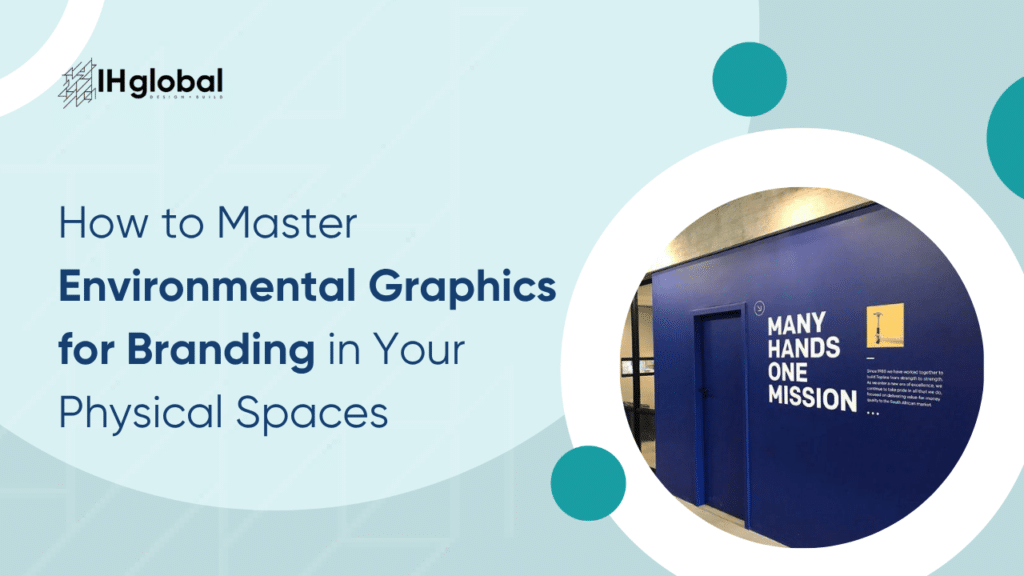
A successful environmental branding strategy envelops the visitor, turning a mundane corporate lobby or retail floor into a dynamic introduction to your company’s mission.
Whether it is through floor-to-ceiling wall murals, elegant glass typography, or interactive digital displays, every element should serve a distinct purpose.
Understanding the core principles of branding vs marketing is crucial here. Your physical space must reflect the deep-rooted, long-term brand identity of your organisation — rather than simply acting as a billboard for short-term marketing campaigns. The architecture speaks when brand guidelines extend beyond digital and print into the physical world.
Planning Your Visual Strategy
Executing Environmental Graphics for Branding requires a highly thoughtful and calculated approach. You cannot simply plaster logos on every empty wall and expect a transformation. Instead, you must carefully map out the customer or employee journey.
When executing your environmental branding design, always prioritise storytelling:
- What do you want people to feel when they enter the space?
- Do you want them to feel energised and innovative, or calm and secure?
- Which areas receive the highest foot traffic and deserve the most visual investment?
Companies are increasingly investing in corporate environmental graphics to boost employee morale, foster creativity, and physically manifest their corporate culture. Research from the Gensler Workplace Survey consistently shows that well-designed workplaces improve employee productivity and satisfaction — and environmental graphics are a core component of a high-performing workspace.
If you are looking to elevate your corporate headquarters beyond standard decor, explore the principles behind creating a world-class experience centre to fully immerse your visitors and stakeholders in your brand’s ecosystem.
Temporary Spaces: Trade Shows and Events
Environmental Graphics for Branding is not limited to permanent office buildings and flagship retail stores. In fact, it is exceptionally powerful in temporary, high-stakes settings like trade shows and industry expos. Exhibitions are inherently crowded, noisy, and visually overwhelming environments — standing out requires bold, intentional design choices.
If you are planning your next expo, the complete guide to exhibition stall design provides a solid foundation for your structural and visual strategy. Understanding how a 2 side open exhibition stall design can boost brand presence allows you to strategically place high-impact graphics exactly where foot traffic is heaviest — maximising visibility without additional spend.
To ensure flawless execution in competitive markets, partnering with experts in trade show services in India guarantees that your visual elements are fabricated with high-quality materials and installed with absolute precision.
Maximising Impact and Engagement
The most successful Environmental Graphics for Branding engage multiple senses and encourage meaningful interaction. Consider incorporating tactile materials, dynamic architectural lighting, or even acoustic elements that complement the visual experience.
Key implementation steps:
- Assess the architecture: Work harmoniously with the existing physical features — like exposed brick or high ceilings — rather than fighting them.
- Keep it cohesive: Ensure your colour palettes, typography, and imagery strictly match your established brand guidelines across all mediums.
- Focus on flow: Guide visitors naturally through the space using subtle visual cues and progressive storytelling.
- Scale appropriately: Ensure graphics are legible from a distance but retain intricate details when viewed up close.
- Plan for longevity: Choose modular systems and durable materials that allow you to refresh or reuse assets across multiple campaigns and events — reducing long-term cost.
Ultimately, leveraging Environmental Graphics for Branding is an investment in how people perceive and remember your organisation. It turns empty walls into dedicated brand ambassadors and transforms passive visits into unforgettable, shareable experiences.
Conclusion
Transforming your physical spaces into an immersive brand experience is no longer just an aesthetic luxury — it is a strategic necessity. By thoughtfully implementing Environmental Graphics for Branding, you bridge the gap between your abstract corporate identity and the tangible world.
Take a look around your current office or think about your upcoming exhibition booth: what story is your space currently telling your visitors, and how can you rewrite it to be unforgettable?
At IH Global, we specialise in bringing these multi-dimensional experiences to life — from conceptualising and building exhibition stalls to designing world-class corporate experience centres. View our portfolio to see the transformations we have delivered for leading brands, or contact us to discuss your next project.
Frequently Asked Questions
What are the best environmental graphics solutions for branding in office spaces?
The most effective solutions include historical wall murals, frosted glass privacy decals, branded wayfinding systems, and backlit reception logos. IH Global elevates these basics by designing custom corporate environments and experience centres where every texture and light fixture is engineered to boost employee morale and captivate visiting stakeholders.
What are environmental graphics and their role in brand identity?
Environmental graphics use visual elements in a physical space to make an abstract brand identity tangible. Their role is to ensure the architecture reflects your core values, tone, and mission. IH Global specialises in translating your digital and print brand guidelines into immersive 3D structures and spatial narratives that leave lasting impressions on clients, partners, and employees.
What are the benefits of experiential graphics for brand engagement?
Experiential graphics stimulate the senses and create interactive touchpoints, building deeper emotional connections that increase brand loyalty and recall. IH Global builds these high-engagement moments into every project, creating striking, photogenic spaces that invite visitors to explore, photograph, and share your brand story.
How do you choose a design agency for corporate environmental branding projects?
Select an agency with a diverse portfolio blending interior design, architecture, and graphics — along with deep knowledge of commercial materials and fabrication. IH Global serves as an ideal end-to-end partner, handling everything from initial spatial flow analysis to final structural fabrication and on-site installation execution under one roof.
How do you design impactful environmental graphics for event branding?
Use concise messaging and high-contrast, bold imagery legible from a distance, while planning for venue lighting and foot traffic patterns. IH Global strategically engineers exhibition graphics and multi-side open stalls to cut through the visual noise of crowded trade show floors — ensuring your brand is seen, remembered, and engaged with.
What are best practices for sustainable environmental graphics production?
Prioritise eco-friendly substrates, VOC-free inks, modular systems that can be repurposed, and local fabrication to reduce transport emissions. IH Global integrates these green practices into every project, utilising sustainable materials and modular booth designs that allow you to reuse premium assets across multiple event cycles — reducing both cost and environmental impact.