TL;DR
- Environmental graphic design (EGD) uses visual communication, wayfinding, and branding elements to make physical spaces easier to navigate and more engaging for visitors.• A successful EGD project follows a structured process — from research and concept development to technical planning, documentation, and installation — to create functional and memorable branded environments.
Imagine walking into a massive, unfamiliar airport. You need to find your gate, grab a coffee, and locate a restroom — all within a tight 30-minute layover. Why don’t you panic? Because clear signage guides your eyes, intuitive colours map out different terminals, and the very architecture seems to tell you exactly where to go.
This seamless integration of communication and physical space is the magic of environmental graphic design (EGD). It is a critical architectural discipline — and international spatial orientation research published by the National Center for Biotechnology Information (NCBI) demonstrates how strategic visual navigation cues directly mediate cognitive maps, helping individuals process complex surroundings and significantly reducing navigation errors.
Here is a comprehensive look into the multi-stage environmental graphic design process that turns ordinary architectural spaces into unforgettable branded environments.
What is Environmental Graphic Design?
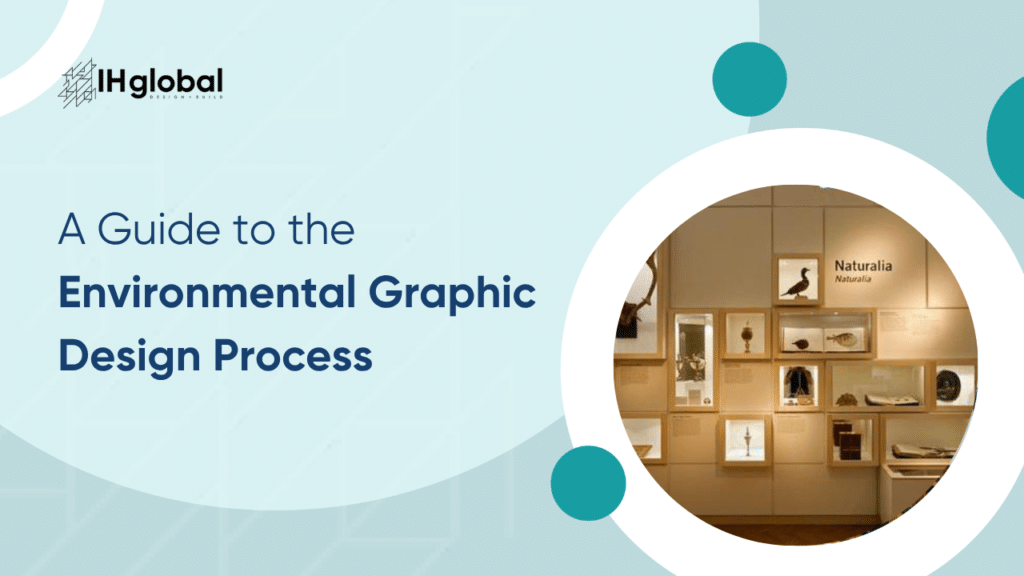
Often used interchangeably with the term experiential graphic design, EGD blends graphic design, architecture, interior design, and industrial fabrication. It encompasses everything from the wayfinding systems that prevent us from getting lost, to the massive murals that tell a company’s history on a lobby wall.
At its core, this discipline ensures that spaces do not just look good — they work effectively and communicate clearly. Many of the same communication principles appear in branding vs marketing, where messaging and audience perception play a central role in building long-term brand value.
When executing these concepts at scale, a trusted exhibit partner helps ensure that creative ideas align with structural and technical requirements from the outset.
The 5 Crucial Stages of the Environmental Graphic Design Process
Creating a functional, engaging physical space requires a deliberate, step-by-step approach. An experienced agency relies on a strict environmental graphic design workflow to move a concept smoothly from initial sketch to physical installation.
1. Research and Discovery
Before a single line is drawn, designers must understand the “why” behind the project. During this initial stage — often called the environmental graphics planning process — the design team interviews stakeholders, analyses architectural blueprints, and studies human traffic behaviour within the space.
| Real-World Example: When designing a children’s hospital, the research stage involves understanding how a child experiences anxiety in medical spaces. The goal is to design playful, comforting visuals rather than cold, clinical directional boards. |
For long-term projects like permanent brand centres, spatial layout decisions are often influenced by techniques from exhibition design. Practical examples can be found in 10 best exhibition stall design ideas and tips.
2. Conceptual Design
This is where creativity takes centre stage. Designers take the insights gathered during research to create mood boards, initial sketches, and digital mockups.
This stage of the experiential graphic design process focuses on finding the right balance between visual identity, storytelling, and regulatory accessibility guidelines. Every design decision is tested against the research findings to ensure it solves the identified spatial and navigation problems.
3. Design Development and Technical Detailing
Once a concept is approved, the environmental graphic design process transitions from abstract art into engineering. The design team drafts precise technical specifications, detailing:
- Exact dimensions and typography scales
- Material selections — for example, brushed aluminium, acrylic, or eco-friendly reclaimed wood
- Lighting elements (LED backlighting, halo effects, ambient lighting)
- Structural mounting details for durability and safety compliance
This phase closely mirrors the meticulous planning detailed in the complete guide to exhibition stall design, where spatial traffic flows and structural constraints directly dictate asset placement and graphic sizing.
4. Documentation and the Environmental Signage Design Process
A beautiful design is useless if a fabricator cannot build it. The environmental signage design process culminates in creating highly detailed “Sign Type Drawings” and location message schedules.
This documentation acts as a literal instruction manual for the manufacturing team — specifying exactly where every signage element will be positioned on the property map, at what height, in what material, and with what fixings.
5. Fabrication, Supervision, and Installation
In this final phase of the environmental graphic design process, the project transitions to industrial workshops. Designers work hand-in-hand with fabricators to oversee production quality and supervise the physical installation on-site.
For large structural footprints, businesses often rely on regional experts skilled in exhibition booth building in India to manage local materials, vendor logistics, and site-specific installation requirements efficiently.
Process Overview:
| Research & Discovery | Conceptual Design | Design Development | Documentation | Fabrication & Installation |
| Stakeholder interviews, site analysis, traffic studies | Mood boards, sketches, digital mockups | Technical specs, materials, lighting, mounting | Sign type drawings, location schedules | Industrial fabrication, site supervision, installation |
Integrating Identity: The Environmental Branding Process
A vital part of modern architectural spaces involves translating a digital corporate identity into a physical dimension. This is known as the environmental branding process.
When a company builds or redesigns a workspace, the office should not just display logos on a wall — it should reflect the company’s culture, ambitions, and values in every material choice and spatial decision.
For instance, creating an impactful tech office often mirrors the spatial strategies used when planning to design a trade show booth that dominates at IMTEX — using bold geometric structures, immersive lighting, and interactive walls to tell a unified story of innovation.
Long-term corporate environments rely on carefully structured visitor journeys — a principle that is equally central to world-class experience centre design, where every touchpoint is designed to reinforce brand authority and build emotional connection.
Conclusion
The environmental graphic design process bridges the gap between human psychology and physical architecture. By carefully guiding visitors through a structured journey of discovery, structural engineering, and strategic storytelling, spaces become more than just concrete and glass — they become memorable, lived experiences that drive real business results.
Ready to transform your physical space into an immersive environment that communicates your corporate culture? Partner with IH Global — India’s leading turnkey design and build agency specialising in custom experiential zones, corporate environments, and permanent brand installations. Contact us to start your project.
Frequently Asked Questions
What are the key stages in the environmental graphic design process?
The process features five distinct phases: Research & Discovery, Conceptual Design, Design Development, Documentation and Programming, and Fabrication Supervision. Skipping any of these phases often results in wayfinding errors, poor material durability, or misaligned brand execution.
Which companies in India specialise in environmental graphic design services?
Top-tier multidisciplinary design firms, experiential marketing agencies, and specialised spatial design studios across major hubs like Bangalore, Mumbai, and Delhi NCR offer these services. IH Global is a leading provider of end-to-end environmental graphic design and fabrication services across India, with an international portfolio spanning trade show environments, corporate offices, and customer experience centres.
How to choose the right environmental graphic design firm?
Look for a design firm with a diverse portfolio demonstrating a strong grasp of both aesthetics and technical execution. The right partner should understand materials, typography scale, lighting, and how architectural layouts influence human psychology and crowd movement. Verified past projects and strong project management capabilities are essential criteria.
Can I get a step-by-step process guide for corporate office environmental graphics?
For a corporate environment, the process focuses heavily on cultural onboarding and spatial zoning:
- Audience Mapping — Who uses the space and what do they need from it?
- Brand Integration — How does the brand identity translate into 3D space?
- Wayfinding Layout — How do people move through the environment?
- Technical Drafting — What are the exact specifications for each element?
- Installation — How is everything brought to life on-site with precision?
How do EGD firms in India typically structure their client engagement?
Firms usually structure engagement around specific project milestones — beginning with a discovery retainer, moving into fixed-fee stages for conceptualisation and technical drafting, and culminating in a supervision fee to oversee physical manufacturing and installation. IH Global offers transparent, milestone-based project management for all environmental graphic design engagements.