TL;DR
- The applications of immersive technologies in operations cover training, repairs, design, and shipping. They help businesses save money and keep workers safe at the same time.
- VR for industrial training lets workers practice hard or risky jobs in a safe way. AR for equipment maintenance gives workers help right in front of their eyes.
- Digital twins in operations build a live computer copy of real machines. Teams can test changes and find problems before they happen for real.
- Remote assistance AR lets workers talk to experts far away. This saves time and money instead of waiting for someone to travel there in person.
Introduction
Operations teams want to save money, make fewer mistakes, and keep workers safe. This is why the applications of immersive technologies in operations matter so much today. Virtual reality, augmented reality, mixed reality, and digital twins are not just cool tech demos anymore.
They are showing up on factory floors, inside warehouses, and on real repair jobs. These tools help teams learn faster, fix machines better, and make smarter choices using live data. This blog shows how these tools are used in real operations today, with simple examples and tips for any business thinking about trying them.
How Immersive Technologies Are Transforming Business Operations
Before we look at specific examples, let us first understand the bigger change happening in businesses today. Immersive technology in manufacturing and other workplaces is moving from small test projects into everyday use.
This is happening because the tools are cheaper now and work well with systems businesses already use.
Here are a few simple ways these technologies are changing how operations work:
- Teams can see live data instead of waiting for old reports
- Workers can test new ideas in a safe virtual space before trying them for real
- Staff can train in situations that feel just like the real job
- Problems can be found and fixed early, before they cause bigger trouble
- Managers can make faster choices since information updates in real time
VR AR operations management used to depend mostly on paper reports and reviews done after something already happened. Now teams can act before problems grow. This change turns operations from a team that reacts to problems into a team that prevents them.
VR for Operational Training and Safety Simulation
Training is one of the clearest uses for immersive technology in operations. It is easy to measure since we can track how fast people learn and how many mistakes they make.
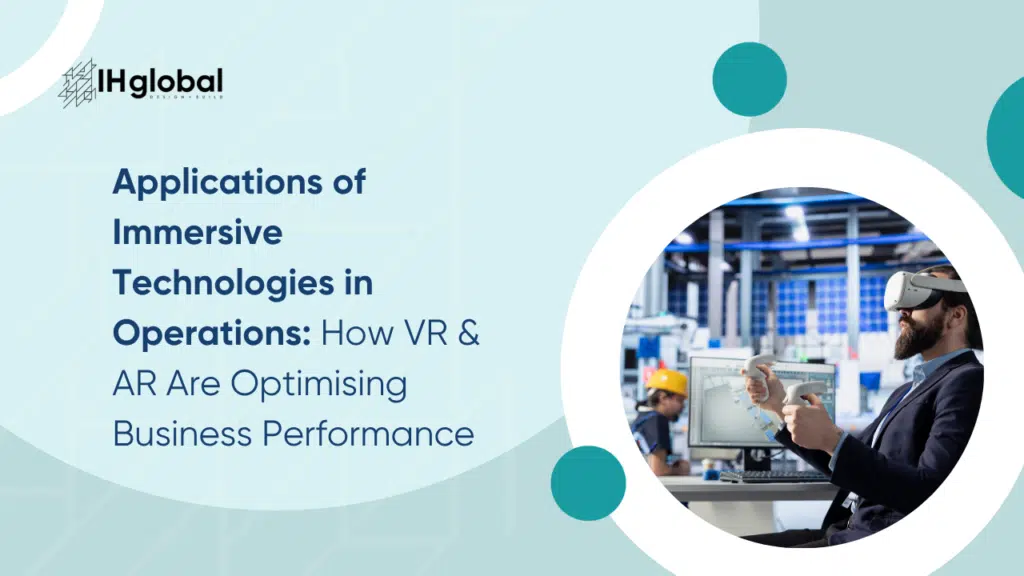
VR for industrial training lets workers practice tasks in a virtual world before they touch real machines. For example, a new worker at a factory can practice driving a forklift or putting together a part while wearing a VR headset.
If they make a mistake, nothing breaks and nobody gets hurt. This is also great for immersive tech for workplace safety, since scary situations like fires, chemical spills, or machine breakdowns can be practiced again and again with zero real danger.
A few common training uses include:
- Practicing in dangerous spots like tight rooms or areas with high voltage
- Learning to use costly machines before touching the real ones
- Running fire drills or spill drills without any real risk
- Helping new workers learn faster by repeating tasks until they feel ready
A study by PwC found that workers using VR finished some training tasks four times faster than workers in a normal classroom. They also felt more confident afterward. Faster learning and more confidence mean fewer mistakes once workers start their real jobs.
AR for Equipment Maintenance and Repair
Repair teams deal with a tough problem every day. Machines are complex, manuals are long, and downtime costs money. This is where AR for equipment maintenance helps the most.
With AR glasses or tablets, workers can see repair steps placed right on top of the machine in front of them. They do not need to flip through a thick manual or search on another screen.
The AR system can show which bolt to remove next, the right torque setting, or a wiring picture exactly where it is needed. This saves time and lowers the chance of human mistakes during repairs.
AR also helps train new repair workers faster. Instead of needing a senior worker nearby at all times, new staff can follow the guided steps on their own. Airlines, energy companies, and factories already use this method to fix machines faster and close the skill gap between new and experienced workers.
Digital Twins for Process Optimization
A digital twin is a live computer copy of a real machine, process, or building. It updates constantly using real data from sensors. Digital twins in operations let teams test changes on the computer first, instead of testing them on real equipment.
For example, a factory can build a digital twin of its whole production line. This lets engineers test what happens if they add a new machine or change the work steps. Instead of stopping real production to test the idea, they run it virtually first. This catches slow spots or safety problems before they ever happen on the real factory floor.
The table below shows a few common ways digital twins help with daily decisions.
| Use Case | What It Solves | Example Industry |
| Predictive maintenance | Warns about machines likely to break down soon | Manufacturing |
| Process simulation | Tests work changes without stopping real production | Logistics |
| Energy optimization | Finds wasted power or resources | Utilities |
| Layout planning | Tests building changes before construction starts | Warehousing |
| Quality monitoring | Spots problems away from normal production standards | Automotive |
This kind of testing is one of the more advanced applications of immersive technologies in operations. It is also where the biggest cost savings often show up over time.
MR for Remote Expert Assistance
Field workers often face a simple but costly problem. The person who can fix the issue is not standing right there. Mixed reality solves this through remote assistance AR tools, which connect workers with experts anywhere in the world.
Using a headset or AR device, a worker can share exactly what they see with an expert far away. The expert can then draw on the screen, point to parts, or guide the worker step by step in real time.
This means no need to fly an expert across the world or wait days for help. Oil and gas companies have used this trick to fix machines on ocean platforms without flying anyone out, saving both time and travel cost.
The biggest perks of MR remote help include faster fixes, lower travel costs, and the power to share one expert’s knowledge across many places at once instead of just one location.
VR and AR for Prototyping and Design Review
Product teams used to build real models to test new designs. Immersive technology is changing that now. VR AR operations management has spread into design and engineering too, where teams review full size 3D models before ever building anything real.
Engineers can step inside a virtual car, building, or machine to check how things look, fit, and work, long before manufacturing starts. This catches design problems early, when fixing them is still cheap.
Teams in different countries can also join the same virtual review at the same time. This cuts travel costs and speeds up decisions across global teams.
Immersive Tech for Warehouse and Logistics Operations
Warehouses and shipping centers deal with constant movement, tight budgets, and costly mistakes. This makes them a great fit for immersive technology.
AR smart glasses now guide warehouse workers through picking and packing jobs. The glasses show the fastest path to the right shelf and confirm the correct item, without the worker needing to look down at a scanner. This speeds up orders and cuts down on mistakes that lead to costly returns or angry customers.
A few useful logistics examples include:
- AR guided picking paths that save time searching for items
- VR training for forklift drivers before they touch real machines
- Digital twin tests of warehouse layouts to use space better
- Real time inventory shown right on top of the shelves
These tools show how immersive tech for workplace safety and speed work well together. Fewer mistakes in a warehouse often means fewer injuries too.
XR for Customer-Facing Operations
Most of this article looks at internal work, but extended reality also helps with tasks that touch customers directly. Stores use AR to let shoppers see how a product looks in their own home. Service companies use VR demos to explain tricky offers before a sale closes.
This matters for operations teams too, since customer facing tools often lead to fewer returns, fewer support calls, and happier customers. All of this feeds back into smoother daily operations.
A furniture store that lets shoppers preview a sofa in their living room using AR usually sees fewer returns than a store that only shows photos and size charts.
ROI of Immersive Technologies in Operations
In the end, every choice comes down to value for money. The ROI of immersive technologies in operations has become easier to track as more businesses use these tools.
Savings usually show up in three places: shorter training time, lower travel costs for remote help, and fewer mistakes during repairs or production. Businesses using AR for equipment maintenance often see faster repairs and fewer repeat service calls.
Companies using digital twins in operations often catch costly mistakes during testing instead of after spending money on real changes.
The starting cost for hardware, software, and training can be high, but most businesses see real savings within one or two years. These tools also grow easily, since one VR training program or AR repair guide can be used at many locations without building it again from scratch each time.
Implementation Roadmap for Businesses
Using immersive technology well takes more than just buying headsets. A clear plan helps avoid wasted money and slow adoption by staff.
- Pick one clear goal first, like training or repairs, instead of trying everything at once
- Run a small test in one team or location before growing it company wide
- Choose tools that work well with systems the business already uses
- Train a small group of staff who can help others learn the new tools
- Track clear results, like training speed or repair accuracy, before growing further
Businesses that work with experienced partners, like specialists at IH Global, often move through this plan faster. Help from teams who already solved common problems saves time and avoids costly mistakes during early rollout.
FAQs
How are immersive technologies used in business operations?
The applications of immersive technologies in operations include VR training, AR guided repairs, digital twin testing, and remote help through mixed reality. These tools help businesses make fewer mistakes, save money, and improve safety across factories, warehouses, and field teams.
What is the role of VR in manufacturing and industrial training?
VR for industrial training lets workers practice hard or risky jobs in a safe, fake setting before touching real machines. This helps workers remember more, learn faster, and avoid accidents, making it one of the most popular uses of VR in factories today.
How does AR help with equipment maintenance and repair?
AR for equipment maintenance shows repair steps, pictures, and settings right on top of the real machine. This saves time finding the problem, lowers mistakes, and helps newer workers fix things with more confidence and accuracy than using a manual alone.
What is a digital twin and how is it used in operations?
A digital twin is a live computer copy of a real machine or process, always updated with real sensor data. Digital twins in operations let teams test changes, guess when machines might break, and improve daily work without touching the real equipment.
How does Mixed Reality help with remote assistance?
Remote assistance AR and mixed reality let field workers show their view to experts far away. The expert can guide them in real time with notes or drawings. This saves travel money, fixes problems faster, and shares expert help across many places at once.
Can immersive technology be used in warehouse and logistics operations?
Yes, immersive technology helps warehouses and shipping centers through AR guided picking paths, VR training for machine drivers, and digital twin tests of building layouts. These tools cut down on picking mistakes, boost safety, and speed up how fast orders get done.
What is the ROI of using immersive technology in operations?
The ROI of immersive technologies in operations usually comes from shorter training time, lower travel costs for remote help, and fewer mistakes during repairs or production. Most businesses see real savings within one to two years after using these tools fully.
What are the biggest challenges of implementing immersive tech in operations?
Common problems include high starting costs, fitting new tools into old systems, and staff who are slow to try something new. Businesses that start with a small test and clear goals usually solve these problems faster than those trying everything all at once.
Which industries are leading the adoption of immersive technology in operations?
Manufacturing, shipping, energy, aerospace, and healthcare are leading the way with immersive technology in operations. These industries deal with costly training, tricky machines, and safety risks, which makes VR AR operations management tools very useful for saving money and avoiding mistakes.