Brands are no longer competing only for attention. They are competing for meaningful interactions that help people remember, understand, and engage with what they offer. Experiential technology creates these interactions by combining physical spaces with digital experiences such as interactive installations, projection mapping, LED displays, touchscreens, and immersive environments.
The benefits of experiential technology extend beyond visual impact. When planned around a clear business objective, it can increase engagement, strengthen brand recall, generate useful visitor data, improve lead quality, and create experiences that can be adapted across campaigns and locations.
TL;DR
- Experiential technology turns passive brand exposure into interactive experiences that encourage visitors to participate.
- It can strengthen brand recall by connecting products and messages with memorable physical and digital experiences.
- Interactive formats can generate first-party data and useful audience insights when data capture is built into the experience.
- Technology can support different objectives across exhibitions, events, and retail environments, from lead generation to product education.
- The business value depends on choosing the right technology for the audience, space, campaign objective, and measurable outcome.
Why Experiential Technology Delivers Real Business Value
Understanding why use experiential technology starts with the business objective rather than the technology itself. An interactive display, immersive environment, or digital installation can give visitors a reason to stop, explore, participate, and spend more time with a brand.
The experiential technology business value becomes clearer when these interactions are connected to measurable outcomes. The right experiential technology solutions can support objectives such as increasing engagement, educating customers, generating leads, collecting audience insights, or strengthening product awareness.
For example, an exhibition stand can use an interactive experience to attract visitors, explain a product, collect qualified leads, and provide sales teams with useful information for follow-up. The same approach can be adapted for corporate events, retail spaces, product launches, museums, and other physical environments.
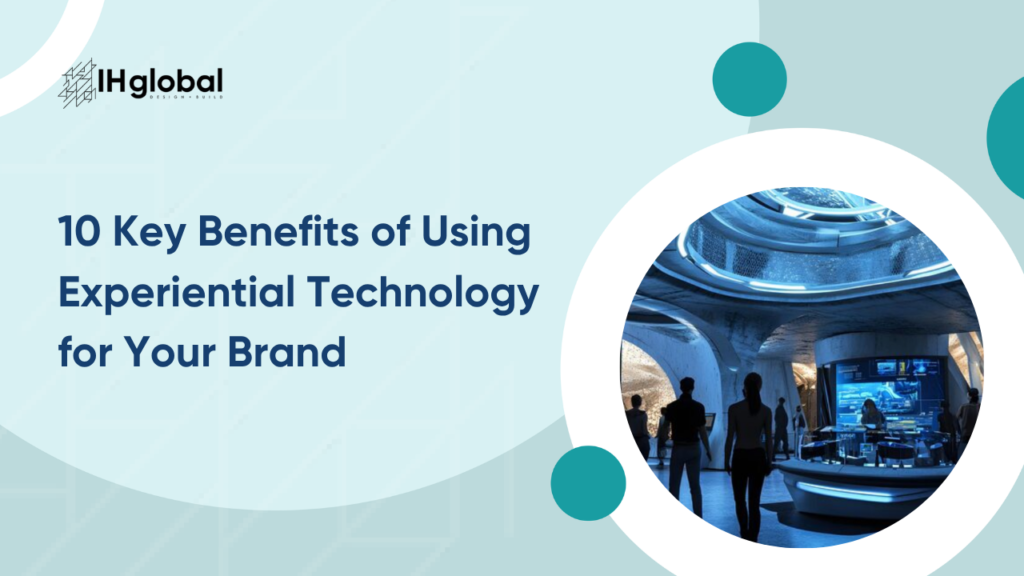
10 Key Benefits of Experiential Technology
1–5. Engagement, Recall, Differentiation, Shareability, Data Capture
- Higher Audience Engagement
Traditional displays often rely on visitors choosing to stop and look. Interactive experiences give them something to do, whether that means exploring a touchscreen, controlling digital content, interacting with sensors, or navigating an immersive environment.
This active participation can encourage visitors to spend more time with the brand. Interactive installation design can turn passive visitors into active participants through touch, motion, and gesture-based experiences.
- Stronger Brand Recall
Memorable experiences can help brands stand out from standard advertising and static displays. When visitors actively participate, the brand message becomes connected to an interaction rather than only a visual impression.
This can be particularly useful at exhibitions and events where audiences encounter multiple brands within a limited period.
- Greater Differentiation
Experiential technology can help brands create environments that look and behave differently from conventional displays. Projection mapping, interactive installations, LED displays, and holographic experiences can all create distinctive brand touchpoints.
These experiential technology advantages are most valuable when the technology supports the brand story rather than being used simply for visual impact.
- More Shareable Experiences
People may be more inclined to photograph or record experiences that are visually distinctive or personally interactive. A well-designed installation can therefore extend the experience beyond the physical venue when visitors share it online.
Shareability should still come from a genuinely interesting experience. Adding technology alone does not guarantee social engagement.
- Data Capture and Audience Insights
Experiential technology can also support data collection. Interactive experiences can be designed to capture information such as visitor preferences, product interests, responses, or contact details, depending on the campaign and applicable consent requirements.
When reviewing experiential technology engagement statistics, brands should look beyond simple interaction counts and consider what those interactions reveal about audience behaviour and campaign performance.
6–10. Cost Efficiency, Scalability, Lead Quality, Flexibility, Competitive Edge
- Better Cost Efficiency Over Time
Experiential technology requires an initial investment, but reusable digital content and hardware can potentially support multiple campaigns, events, or locations.
For brands running recurring activations, modular technology and adaptable content can reduce the need to build an entirely new physical experience for every campaign.
- Greater Scalability
Digital experiences can be adapted for different venues, audiences, products, and campaign objectives. A core experience can be modified with new content, messaging, products, or visual assets rather than rebuilt from scratch.
This makes experiential technology useful for brands operating across multiple exhibitions, retail locations, or events.
- Higher-Quality Leads
Engagement alone does not necessarily create business value. The experience should help identify visitors who have genuine interest in a product or service.
For example, an interactive product configurator can allow visitors to explore relevant options while providing sales teams with information about their interests. This can make subsequent conversations more relevant.
- Greater Flexibility Across Campaigns
Experiential technology can support different formats and communication objectives. A touchscreen can educate visitors, a projection mapping experience can tell a brand story, and a digital display can showcase product content.
This flexibility allows brands to select technology according to the audience, environment, message, and desired outcome rather than using the same format for every activation.
- Stronger Competitive Edge
When competing brands offer similar products or services, the physical experience can become an important point of differentiation. Technology can help create environments that communicate innovation while giving visitors a reason to interact with the brand.
The advantage comes from how effectively the technology supports the brand message, audience journey, and business objective.
Benefits by Use Case: Exhibitions, Events, Retail
Exhibitions: Exhibition stands have limited time to attract attention and start conversations. Interactive installations, LED displays, projection mapping, and holographic experiences can turn a static stand into an environment that encourages visitors to participate.
An LED and video wall solution can provide high-visibility branding, while interactive technology can support product education and lead generation. The right combination depends on stand size, audience, product complexity, and campaign objectives.
Events: At corporate events, launches, conferences, and brand activations, experiential technology can connect the physical environment with the event narrative. Projection mapping can transform stages and physical structures, while interactive experiences can encourage audience participation.
Event technology solutions can also integrate different technologies and engagement tools into a more coordinated event experience.
Retail: In retail environments, technology can help customers explore products and information before making a purchase decision. Interactive screens, digital product displays, gesture-based experiences, and immersive installations can make product discovery more engaging.
Holographic display solutions can provide another format for distinctive product presentations, while interactive experiences can help brands understand customer preferences, subject to appropriate consent and data-handling requirements.
Conclusion
The benefits of experiential technology go beyond creating visually impressive displays. When connected to a clear objective, it can help brands increase engagement, strengthen recall, differentiate themselves, capture data, improve lead quality, and create experiences that can be adapted across campaigns.
The most effective approach starts with the audience journey and business objective. Brands should then select the technology that supports the desired outcome, whether that is attracting exhibition visitors, educating customers, generating leads, or creating a memorable event experience.
Ultimately, experiential technology delivers value when creativity and technology work together with a measurable business purpose. The goal is not simply to create something impressive, but to create an experience that gives the audience a reason to engage with the brand.
Frequently Asked Questions
What are the main benefits of experiential technology for a brand?
The main benefits include higher engagement, stronger brand recall, differentiation, data capture, better lead quality, scalability, and flexibility. The value depends on how closely the experience is connected to the campaign objective.
Does experiential technology deliver measurable ROI?
It can, provided the experience has measurable objectives. Brands can track interactions, leads, dwell time, data captured, conversions, and post-event engagement to evaluate business value.
How does experiential technology improve brand recall?
It encourages people to actively participate rather than simply view a message. Interactive and immersive experiences can make brand communication more memorable by connecting the message with a physical or digital interaction.
Can experiential technology capture visitor data?
Yes. Interactive experiences can collect information such as contact details, preferences, responses, or product interests, subject to appropriate consent and data-handling requirements.
Is experiential technology worth the investment for smaller brands?
It can be, particularly when the technology is matched to a specific objective. Smaller brands can consider modular or reusable experiences rather than investing in highly complex installations for every campaign.