TL;DR
- These immersive technology examples show how businesses are using AR, VR, and MR to improve training, customer experiences, product visualization, healthcare procedures, manufacturing processes, and marketing campaigns across multiple industries.
- From IKEA’s AR furniture app to Ford’s VR training programs, immersive technologies are helping organizations reduce costs, improve learning outcomes, increase engagement, and support better decision-making through interactive digital experiences.
- Retail, healthcare, education, aerospace, manufacturing, and events are among the industries seeing the fastest adoption of immersive technology, proving that these tools are moving beyond experimentation into practical business use.
- The growing number of real-world AR, VR, and MR implementations demonstrates that immersive technology is becoming a long-term business tool rather than a temporary trend, creating measurable value for both organizations and customers.
Introduction
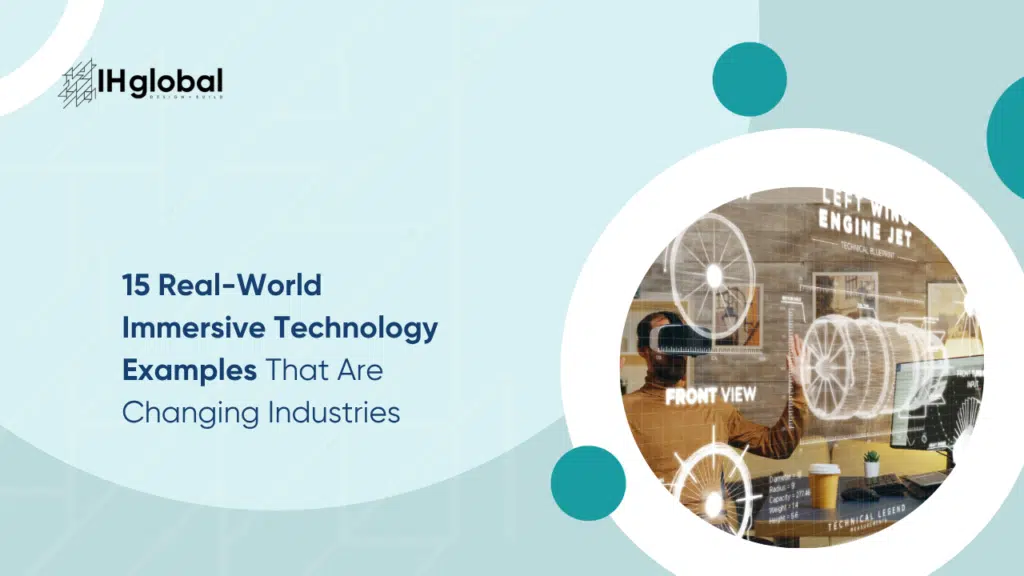
Immersive technologies are no longer futuristic concepts. Today, businesses across industries are using virtual reality, augmented reality, and mixed reality to solve real problems, improve efficiency, and create better customer experiences.
From employee training and healthcare simulations to virtual shopping and trade show experiences, immersive technologies are becoming part of everyday business operations. These solutions help organizations engage users in ways that traditional digital tools cannot.
In this guide, we will explore 15 real-world immersive technology examples that are changing industries today. These examples demonstrate how businesses are using AR, VR, and MR to improve performance, reduce costs, and create more engaging experiences.
What Counts as an Immersive Technology Example?
An immersive technology example is any real-world use of VR, AR, or MR that lets people interact with digital environments in a more real and engaging way. It goes beyond normal screens and makes users feel inside the experience.
These technologies are widely used in industries like education, healthcare, retail, and manufacturing. Many modern AR-VR use cases 2026 show how companies use these tools for training, shopping, design, and customer engagement in simple and visual ways.
A strong example is when users can interact with digital objects in real time, such as trying products virtually or practicing skills in a simulated environment. These real applications are often shared as immersive tech case studies across industries.
In simple terms, if a technology helps people experience or interact with a digital version of something in a realistic way, like VR training or AR product previews, it is considered an immersive technology example.
15 Real-World Immersive Technology Examples
Immersive technology is now used in many real industries to solve real problems and improve user experience. These immersive technology examples show how VR, AR, and MR are changing training, shopping, healthcare, and marketing in simple and powerful ways.
Below are real-world cases used by global brands today.
1. Ford VR Assembly Line Training
Ford uses virtual reality to train employees on assembly line procedures before they work with physical equipment. This allows workers to practice tasks safely in a simulated environment.
The program helps reduce training costs, improve safety, and increase employee confidence before entering the production floor.
2. IKEA Place AR App
The IKEA Place app allows customers to place digital furniture inside their homes using augmented reality.
This is one of the most recognized examples of AR in business because it helps shoppers visualize products before making a purchase decision, reducing uncertainty and improving customer satisfaction.
3. Walmart VR Employee Training
Walmart uses VR simulations to train employees for customer service situations, emergency scenarios, and operational tasks.
Employees can practice real-world situations in a controlled environment, helping them gain experience before facing similar situations in stores.
4. Microsoft HoloLens in Surgery (MR)
Microsoft HoloLens is used in surgery to help doctors see 3D medical images while operating on patients. It shows important information like scans and anatomy in real time, so surgeons can work more accurately and safely during complex procedures.
This mixed reality system improves decision-making by combining real-world view with digital data overlays. It supports better precision in healthcare and reduces risks during surgery.
It is one of the most advanced examples of virtual reality applications industries use today in modern medicine.
5. ASOS Virtual Try-On (AR)
ASOS uses augmented reality so customers can try clothes digitally before buying. It shows how outfits may look on a person using a phone camera. This helps users understand style, fit, and appearance in a more real and easy way while shopping online.
It makes fashion shopping simpler and more confident. Customers can see different outfits on themselves without physically wearing them, which reduces confusion and improves buying decisions.
6. Nike Fit AR Shoe-Fitting App
Nike Fit uses augmented reality to scan a person’s feet using a smartphone camera. It then suggests the correct shoe size based on the foot shape and measurements. This helps users choose the right size more accurately while shopping online for shoes.
It reduces the chances of wrong size orders and returns. Customers feel more confident because they get better fitting shoes, making the shopping experience easier, faster, and more reliable.
7. NASA VR Space Training
NASA uses virtual reality to train astronauts in a safe and controlled digital space. It creates a realistic space environment where astronauts can practice missions, repairs, and emergency situations before going into real space.
This helps them learn complex tasks without any risk. It improves confidence, safety, and performance by giving them real-like experience of working in space conditions.
8. Airbus AR Assembly Instructions
Airbus uses augmented reality to help workers assemble aircraft parts with clear digital instructions. These instructions appear on real machines and guide each step in a simple and visual way using smart devices.
This reduces mistakes and improves accuracy during production. Workers can complete complex tasks faster and more safely, making the manufacturing process more efficient and reliable.
9. Marriott VR Travel Previews
Marriott uses virtual reality to show customers hotel rooms and travel destinations before they book. People can explore places virtually using VR headsets, which makes it feel like they are actually visiting the location.
This helps travelers make better decisions with more confidence. It improves the booking experience by giving a clear and realistic view of hotels and destinations.
10. Sephora AR Virtual Makeup Try-On
Sephora uses augmented reality to let customers try makeup like lipstick, foundation, and eye products using their phone camera. It shows how different shades will look on the face in real time, making shopping more visual and easy.
This helps users choose the right products with confidence. It reduces guesswork and makes online beauty shopping more fun, interactive, and accurate.
11. Google Arts & Culture VR Museum Tours
Google Arts & Culture uses virtual reality to let people explore famous museums and artworks from anywhere in the world. Users can walk through galleries and view paintings in a digital 3D environment that feels real and engaging.
This makes learning art and history easier and more interesting. It gives people a chance to experience global culture without traveling physically to museums.
12. Snap Inc. AR for Consumer Decision-Making
Snap Inc. uses augmented reality to help users try products like glasses, makeup, or clothes using their phone camera. It shows how items will look in real time, making shopping more interactive and visual for users.
This helps people make better buying decisions. It reduces confusion and increases confidence by letting users see products on themselves before purchasing.
13. Digital Twins in Manufacturing
Digital twins are virtual copies of real machines or factory systems used in manufacturing. They help companies test, monitor, and improve performance without touching the real equipment. Everything is shown in a digital model that behaves like the real system.
This helps reduce errors and saves time and money. It also improves planning and makes production processes more efficient, safe, and easier to manage in real time.
14. Immersive 360° Brand Experiences at Trade Shows
Brands use immersive 360° experiences at trade shows to attract visitors with virtual environments. People can explore products, spaces, and brand stories in a fully digital and interactive way using screens or VR setups.
This makes booths more engaging and memorable. It helps companies stand out in events by giving visitors a fun and realistic way to experience their products.
15. IH Global Interactive Trade Show Booths
IH Global interactive trade show booths use immersive technology like AR, VR, and digital displays to create engaging brand experiences at events. Visitors can explore products, stories, and services in a more visual and interactive way instead of only reading or watching.
These booths help companies attract more attention during trade shows by offering hands-on digital experiences. They improve engagement, make product understanding easier, and help brands communicate their message more clearly in crowded event spaces.
Overall, these interactive booths make exhibitions more memorable and help brands connect better with visitors through simple and engaging immersive experiences.
What These Examples Tell Us About Immersive Tech Adoption
These immersive technology examples reveal several important trends about adoption across industries.
First, organizations are using immersive technology to solve practical business challenges rather than simply experimenting with new tools. Training, visualization, collaboration, and customer engagement remain the most common applications.
Second, many successful immersive tech case studies focus on measurable outcomes such as reducing costs, improving efficiency, increasing sales, or enhancing customer experiences. Businesses are increasingly evaluating immersive technology based on real results rather than novelty.
Third, immersive technologies are becoming more accessible. Hardware costs are decreasing, software platforms are improving, and businesses of all sizes can now explore solutions that were previously available only to large enterprises.
As adoption continues to grow, companies such as IH Global and many others are participating in a broader shift toward more interactive and engaging digital experiences across industries.
FAQs
What are the best examples of immersive technology in real life?
Some of the best immersive technology examples include IKEA Place AR, Ford VR training, NASA VR simulations, Microsoft HoloLens surgery applications, and digital twins in manufacturing. These examples demonstrate how immersive technology solves real business and operational challenges.
Which companies use VR for employee training?
Companies such as Walmart, Ford, and NASA use VR training programs. These systems provide realistic simulations that help employees learn procedures, practice skills, and prepare for complex situations without the risks or costs associated with traditional training methods.
What are examples of AR in retail?
Retail examples include IKEA Place, Nike Fit, Sephora Virtual Try-On, and ASOS virtual shopping experiences. These applications help customers visualize products, test items digitally, and make more informed purchasing decisions before completing transactions.
How do brands use immersive technology at trade shows?
Brands use immersive technology through virtual demonstrations, interactive displays, augmented reality experiences, and 360-degree storytelling environments. These experiences help attract visitors, increase engagement, and create memorable interactions during exhibitions and events.
What is an example of mixed reality in healthcare?
Microsoft HoloLens is one of the most well-known mixed reality examples in healthcare. Surgeons can view patient data, 3D anatomical models, and procedural information while performing operations, improving access to important information during medical procedures.
What is an example of immersive technology in education?
Google Arts & Culture VR museum tours are a strong example. Students and learners can explore museums, historical sites, and cultural landmarks virtually, creating engaging educational experiences regardless of physical location.
How does IKEA use augmented reality?
IKEA uses the IKEA Place app, which allows customers to view virtual furniture inside their homes using smartphone cameras. This helps users understand size, placement, and appearance before making purchasing decisions, improving confidence and reducing uncertainty.
Can small and medium businesses afford immersive technology?
Yes. Costs have decreased significantly in recent years. Many immersive technology solutions now offer scalable options, making AR and VR more accessible to small and medium-sized businesses that want to improve training, marketing, sales, or customer experiences.