TL;DR
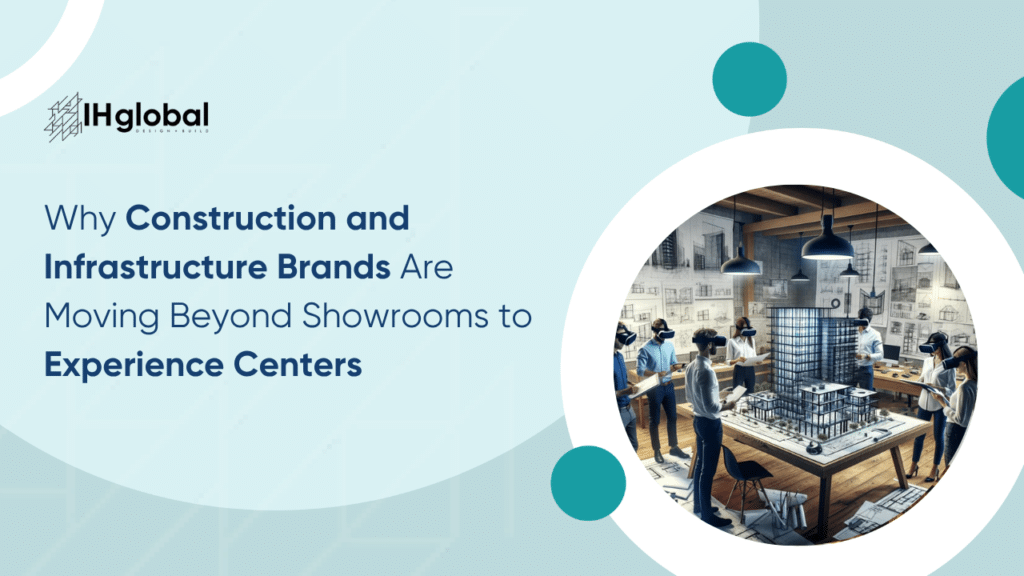
- Construction brands are replacing traditional showrooms with immersive experience centers that use AR, VR, live material demonstrations, and interactive technology to help clients visualise real-world applications of products and systems.
- These experience centers improve B2B engagement, accelerate decision-making, and strengthen brand trust by combining physical material interaction with digital storytelling and hands-on product demonstration.
For years, construction brands relied on traditional showrooms — static aisles of tiles, panels, and specification samples that left much to the imagination. A buyer looking at a marble slab on a display shelf struggles to visualise it in a high-traffic hotel lobby during a busy checkout peak. A specifier examining an insulation panel cannot assess its thermal performance from physical inspection alone.
Today, the industry is moving beyond this limitation. Research published in MDPI’s Buildings journal confirms that immersive technologies including VR and AR can significantly improve design decision accuracy and reduce costly on-site revisions by identifying integration issues during the specification phase.
Construction experience centers are the physical manifestation of this shift — transforming static material displays into interactive, technology-enhanced environments where buyers experience how products perform, integrate, and look in their intended real-world contexts.
The Limitations of Traditional Construction Showrooms
Traditional construction showrooms served a clear purpose: physical verification of material quality and finish. But they consistently failed to answer the most important question in B2B specification: how will this product perform and look within the context of my specific project?
This disconnect between the showroom sample and the live application creates procurement friction — extended decision cycles, elevated sampling and mockup costs, and the risk of post-installation disappointment. McKinsey’s analysis of construction’s digital future estimates that poor design and specification decisions account for a significant proportion of the cost overruns that plague large construction projects globally.
Construction experience centers eliminate this friction by presenting materials within immersive, contextualised environments. Consider the difference: instead of looking at a stack of insulation boards on a shelf, a visitor enters a ‘thermal chamber’ — a demonstration room where they can feel the temperature difference between a standard wall construction and one treated with the brand’s high-performance insulation system. The performance claim becomes a direct physical experience.
Explore the future of customer experience centers to see how construction brands are repositioning these spaces as permanent strategic brand assets.
What Sets Construction Experience Centers Apart From Showrooms?
The primary difference between a traditional showroom and a construction experience center lies in the nature of engagement. Showrooms are passive environments where visitors observe products. Experience centers are active environments where visitors interact with systems.
- Live Stress Testing: Demonstrating how structural materials, cladding systems, or engineered timber components perform under simulated extreme conditions — wind loading, thermal cycling, or impact resistance — using live test rigs that produce immediate, verifiable results.
- Digital Overlay Technology: Using AR tablets or smart glasses to reveal the internal architecture hidden behind a finished wall panel — showing plumbing runs, structural framing, thermal bridging paths, and service void configurations that would otherwise be invisible at the point of specification.
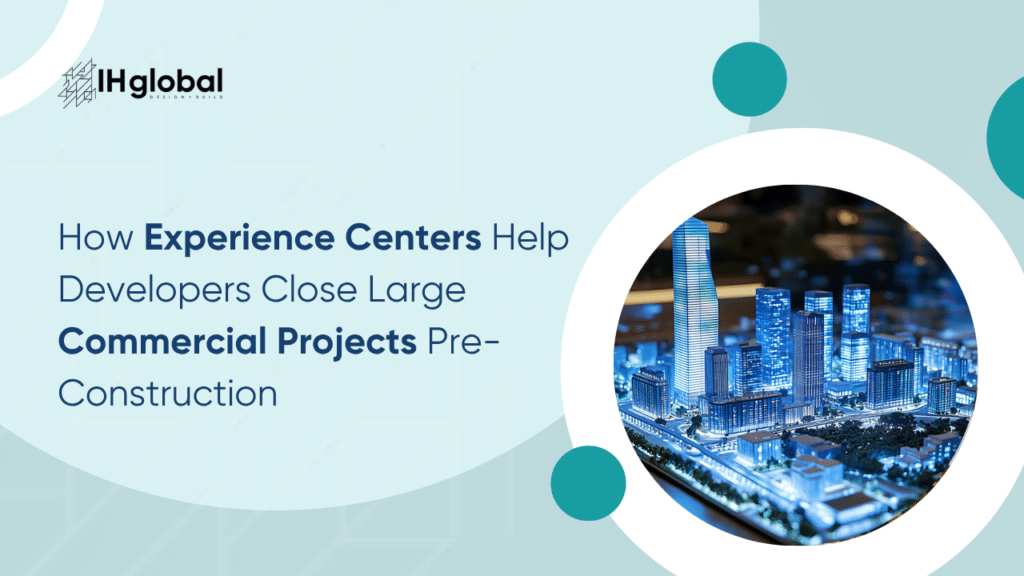
- Scale Modelling and BIM Integration: 3D-printed physical scale models of complex urban infrastructure projects, combined with live BIM model interaction, that allow engineers and architects to explore material integration challenges in a navigable three-dimensional context.
For high-stakes infrastructure projects, infrastructure brand experience centers function as proof-of-concept environments where engineers and architects can resolve integration questions before a single element is manufactured or delivered to site.
The Rise of B2B Engagement in Construction Experience Centers
In the professional construction and infrastructure sector, B2B relationships are built on demonstrated reliability, proven performance, and long-term partnership capability. Decision-makers managing infrastructure projects — roads, bridges, commercial developments, industrial facilities — are not evaluating products in isolation. They are selecting supply chain partners who can support complex, multi-year programmes.
A construction experience center allows a brand to communicate all three reliability dimensions simultaneously: manufacturing capability through scale and precision of displayed components; R&D investment through innovation displays and new product previews; and post-contract support infrastructure through training facility and technical helpdesk demonstrations.
This holistic, experience-based positioning transforms the commercial relationship from transactional to consultative — which is fundamental to winning and retaining large-scale infrastructure contracts. There are compelling reasons why infrastructure and technology companies need a customer experience center to remain competitive at enterprise scale.
Read 7 key trends shaping customer experience centers to understand how B2B construction brands are structuring their experience spaces for maximum stakeholder impact.
Technology Integration: The New Standard in Construction Experience Centers
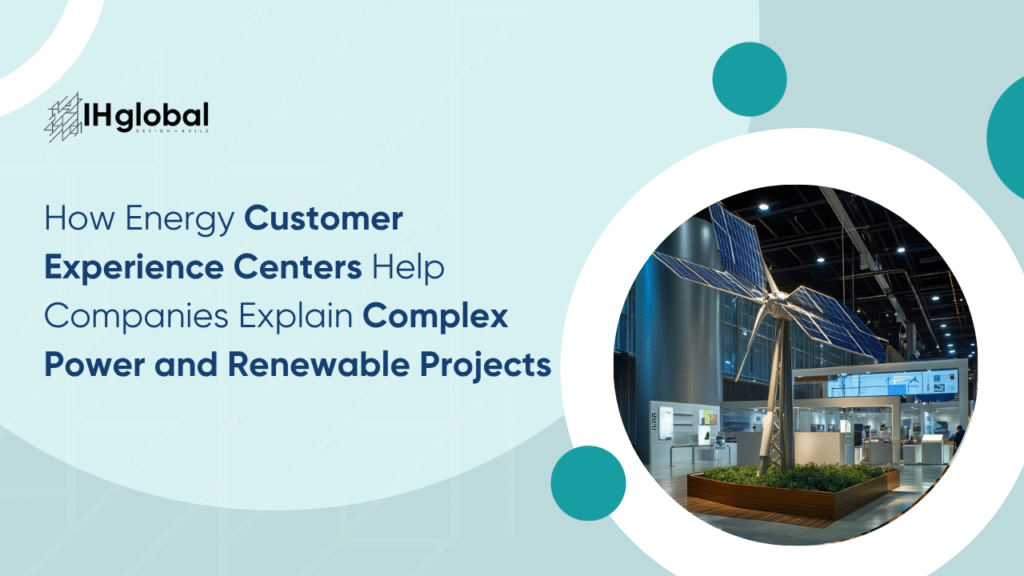
A defining feature of the most effective construction experience centers is the integration of ‘phygital’ elements — physical product interaction combined with digital intelligence layers. Sensors, interactive material libraries, touchscreen specification walls, and 3D projection mapping transform construction product display zones into interactive specification laboratories.
- Interactive Material Libraries: RFID-tagged sample materials that, when placed on an integrated smart table, immediately trigger detailed product information screens — showing carbon footprint, origin, compliance certifications, and product performance data simultaneously.
- Acoustic Demonstration Zones: Soundproof demonstration pods where architects and acoustic engineers can directly compare the noise attenuation performance of different ceiling, partition, and flooring systems — with decibel measurements displayed in real time.
- Dynamic Lighting Simulators: Demonstration rooms that model natural light conditions from dawn to dusk, allowing facade material specifiers to observe exactly how different cladding materials, glazing systems, and surface finishes respond across a complete daily light cycle and across seasonal sun angles.
For a detailed guide to integrating these technology elements effectively, explore IH Global’s customer experience center design guide.
Human-Centric Design in Construction Experience Centers
The most commercially effective construction experience centers are designed around human stories as much as material performance. Construction brands are not simply selling cement, glass, or steel — they are selling the environments where businesses operate, communities gather, and families live. The most powerful experience centers tap into this emotional dimension alongside the technical one.
By creating narrative journeys within the center — structured walk-throughs that move from raw material through manufacturing process to finished application — brands connect the technical excellence of their products with the human outcomes those products enable.
The investment in experience centers also generates significant earned media value. Well-designed, visually distinctive construction experience centers are regularly featured in architecture and design publications, generating organic awareness among the specifier community that traditional advertising cannot reach. The professional credibility of editorial coverage in peer-reviewed industry contexts is worth significantly more than equivalent paid media.
Explore examples of the world’s most effective customer experience centers to see how construction and infrastructure brands are designing these spaces for both technical and human-centred impact.
Conclusion
The construction and infrastructure sector is often characterised as slow to innovate, but the rapid shift toward experience centers demonstrates otherwise. As market competition intensifies and project complexity increases, the ability to demonstrate performance, communicate innovation, and build partnership-level relationships within an immersive, professionally designed environment is becoming a decisive competitive advantage.
Brands that continue to rely solely on traditional material displays risk losing ground to competitors who have recognised that modern B2B construction buyers — particularly a younger generation of engineers and architects who are digital natives — evaluate experience as a direct signal of product and organisational quality.
The move toward construction experience centers is not a trend. It is the new blueprint for commercial success in the built environment. At IH Global, we help construction and infrastructure brands design and build world-class experience environments. View our portfolio or contact us to begin.
Frequently Asked Questions
What are construction experience centers?
Construction experience centers are purpose-built environments where construction and infrastructure brands demonstrate their products and systems through live material testing, AR/VR visualisation, interactive specification tools, and physical mockup environments. They go beyond the passive product display of a traditional showroom to provide the active, contextualised evaluation that professional specifiers and B2B buyers require.
Why are construction brands moving beyond traditional showrooms?
Because traditional showrooms consistently fail to answer the specification question that matters most: how will this material or system perform and look within the context of a specific real-world project? Experience centers solve this by presenting products in realistic application contexts, demonstrating live performance data, and providing the interactive technical engagement that drives confident specification decisions.
How do construction experience centers improve B2B customer engagement?
They transform the evaluation process from passive observation to active participation. When a specification engineer can trigger a live structural load test, an architect can apply AR overlays to see hidden services within a wall panel, and a procurement director can explore a digital material library linked to real-time carbon and cost data — the quality of engagement is categorically higher than any brochure or static display can deliver.
What technology is used in construction experience centers?
Modern construction experience centers incorporate AR and VR immersive environments, RFID-enabled interactive material libraries, live structural and thermal testing rigs with real-time data displays, acoustic demonstration pods, dynamic lighting simulation rooms, BIM model integration platforms, and 3D scale model environments. The specific technology configuration is designed around the product portfolio and the professional audience profile.
Why are B2B experience centers important for infrastructure brands?
Infrastructure brand relationships are built on long-term partnership, demonstrated technical capability, and post-contract support reliability — none of which can be adequately communicated through a product catalogue. Experience centers provide the environment where infrastructure brands can demonstrate all three dimensions simultaneously — to technical teams, procurement leads, and executive stakeholders — in a single structured engagement.
How does an experience center support construction product specification?
By resolving the key specification uncertainties that delay procurement approval: visual appearance in application context, measured performance under simulated service conditions, compatibility with related systems and materials, compliance with regulatory and certification requirements, and supply chain reliability evidence. When a specifier can verify all five within a single experience center visit, the specification decision timeline collapses from weeks to days.