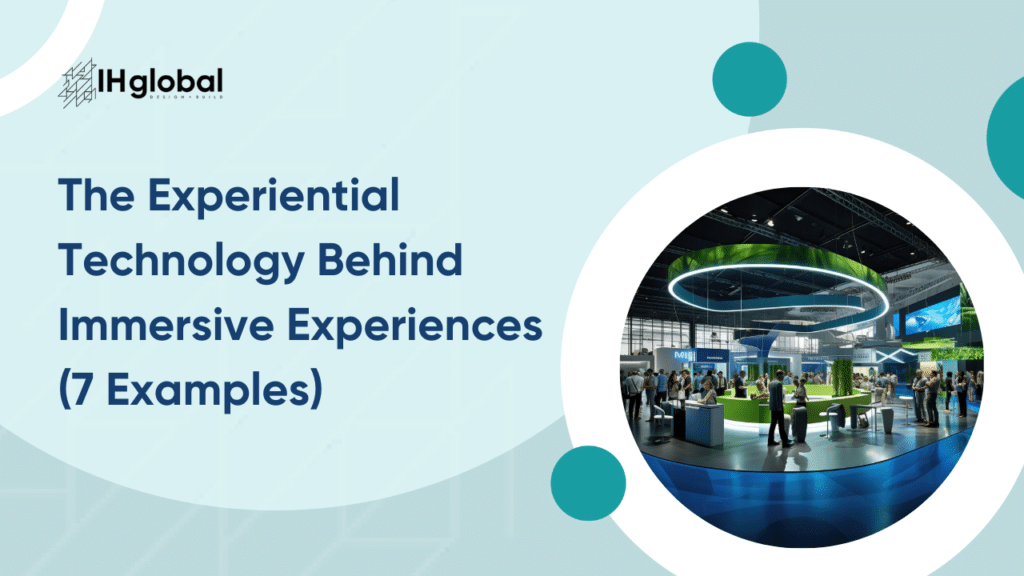
For any business today, staying ahead of the curve means understanding how to use experiential technology examples to capture attention. Exhibitors and business owners need to know that the way people interact with products has evolved. Modern expo design companies are finding fresh ways to promote products using a mix of physical design and digital magic. By using the right experiential tech, a brand can turn a quiet visitor into a highly engaged participant.
IH Global specializes in helping companies navigate this new landscape. We understand that an interactive trade show booth is not just an expense but a strategic tool for growth. Whether you are looking to showcase your brand at the next upcoming trade shows, the goal is to create a moment that sticks. This blog will explore the seven most prevalent technologies used in exhibition design today and how they help companies succeed.
TL;DR/Summary
Experiential technology is the mix of physical design and smart digital layers that turns a booth or experience center into an interactive, conversion-driven journey. Some key experiential technology examples like projection mapping, RFID/NFC personalization, LiDAR reactive environments, AI + motion capture, VR with haptics, etc.
In this blog, you’ll learn:
- How each experiential technology improves engagement and lead quality at trade shows
- Where specific tools fit best in booth layouts and visitor flow
- What trends are shaping immersive digital experiences in exhibition design right now
7 Experiential Technology Examples that Brings Immersive Experiences to Life
Immersive experiences do not happen by accident. They are built on powerful technologies that shape how we see, feel, and interact. When you apply concepts in experience center design, you ensure that every light, sound, and screen serves a purpose in that living story.
Large Scale Projection Mapping and 3D Modeling
Projection mapping is one of the most visible experiential technology examples found at major expos. This technology uses powerful projectors to throw light onto non-flat surfaces like 3D city models, cars, or custom booth walls. It allows designers to “paint” with light, making a physical object look like it is moving, changing color, or opening up to show its internal parts.
Using this immersive experience technology allows for incredible flexibility. For instance, an automotive company can use one physical car model and project different paint colors, wheel designs, and engine specs onto it. This saves space and creates a high energy visual show. It is a perfect example of a digital interactive experience where the visitor can choose a setting on a tablet and see the physical model change in front of them.
Personalized Journeys with RFID and NFC
Every visitor at a trade show wants a unique experience. Using Radio Frequency Identification (RFID) badges or bracelets is one of the top experiential technology examples for achieving this. When a visitor walks into a booth, sensors can read their badge and immediately pull up their preferences or greeting on a screen.
This creates immersive digital experiences that feel personal and high-touch. For the exhibitor, this experiential tech provides deep data insights. You can track which stations a visitor liked most and how long they stayed there. This is how technology transforms customer experience centers.
Lidar-Based Reactive Environments
Lidar technology, which uses laser pulses to map a room, is now being used to create reactive environments. These are great experiential technology examples because they do not require the user to wear any gear. As a visitor moves through the booth, the environment reacts to their position. Shadows might turn into digital art, or floors might ripple like water as they walk.
These experiential experiences are powerful because they feel natural. Designers use this to guide people through a specific path in a booth. It ensures that every person gets the full brand story in a way that feels like they are discovering it themselves. Such a digital interactive experience is highly effective at keeping crowds engaged during peak hours.
AI Generated Content and Motion Capture
Artificial intelligence is the latest frontier for experiential technology examples. AI can now be used to create real-time art or music based on a visitor’s gestures or energy. For example, some booths use motion capture cameras to track a person’s dance moves and turn them into a 3D avatar on a giant LED wall.
This type of interactive digital experience is perfect for social media sharing. When a visitor creates a piece of AI art at your booth, they are likely to share it with their followers. Using immersive experience technology like AI ensures your booth is not just a place for information but a place for co-creation. It makes the visitor a part of the brand’s creative process.
VR and Haptics for Complex Simulations
In industries like healthcare or manufacturing, it can be hard to show how a product works in a small space. This is where virtual reality experiential technology examples provide the perfect solution.
When you add haptic feedback—tools that let you “feel” resistance—the experience becomes even more real. You’ll see these virtual reality experiential technology examples in the upcoming pharma expo in India, which solves the problem of demonstrating bulky or sensitive equipment. It allows potential buyers to get a hands-on feel for the product in a safe, controlled virtual world.
Transparent OLED and X-Ray Displays
Imagine a piece of glass that is also a high-definition computer screen. Transparent OLED is one of the most futuristic experiential technology examples available for exhibitors. These screens allow visitors to see the actual product behind the glass while digital data is overlaid on top of it. It acts like a real-life “X ray” view.
This interactive digital experience is excellent for showing the internal mechanisms of high tech products. For example, an electronics brand can show the circuitry of a phone while the phone itself sits behind the screen.
Kinetic Sculptures and Spatial Audio
Kinetic sculptures use movement to create a sense of life and energy. When combined with spatial audio—sound that seems to come from specific points in 3D space—you create a truly digital interactive experience. Spatial audio allows you to create different “mood zones” within a single booth.
By using these experiential technology examples, you can have a high energy product demo center and a quiet lounge for meetings just a few feet away. The sound does not bleed over because the technology directs the audio only to where it is needed.
Choosing the Ideal Experiential Marketing for Upcoming Expos
Selecting from these experiential technology examples depends on your goals and your space. If you have a one side open stall design, you might focus on a singular, powerful screen or an AI photo booth to draw people in from the aisle. If you have a 2 side open stall design, you have more room for movement and could install Lidar sensors to create a reactive path.
The key is to match the technology to the brand message. You should never use tech just for the sake of it. Instead, work with a partner who understands all types of exhibition stalls and can advise on what will provide the best return on investment.
Conclusion
The future of brand engagement is bright and interactive. By using experiential technology examples, businesses can break through the noise of a crowded trade show floor. Whether it is through immersive digital experiences that tell a story or experiential experiences that engage the senses, the goal is always the same: to build a deeper connection with your audience.
As you plan for your next event, remember that the technology you choose should support your brand’s unique voice. IH Global is here to turn your vision into a reality. Let our team of trade show experts help you use experiential tech to create a booth that is not just seen, but felt and remembered.
Frequently Asked Questions
Which companies provide experiential technology solutions?
Many companies offer experiential technology solutions such as AR/VR, projection mapping, interactive displays, RFID/NFC, and data-led storytelling. IH Global is one such partner, delivering end-to-end strategy, design, fabrication, and on-site execution for booths and customer experience centers.
What experiential technology products are used in the automotive industry?
The automotive industry often uses experiential technology examples like transparent LED screens for engine visualization, VR driving simulators, and Lidar sensors that react to people walking around a new car model.
What are some popular experiential technology examples used in industries?
Some of the most popular tools include projection mapping, RFID enabled personalized tours, AI photo booths, and interactive touch walls. These tools are used across retail, healthcare, and tech sectors to increase engagement.
What are examples of immersive technology?
Examples include virtual reality headsets, augmented reality apps on smartphones, spatial audio soundscapes, and 360 degree LED vaults. These technologies are designed to wrap the user in a digital environment.
What are the pillars of experiential technology?
The pillars of experiential technology are impactful, immersive, interactive, and inclusive. They focus on creating meaningful experiences with clear intent, using technologies like AR and VR to engage the senses, encouraging active user participation, and ensuring accessibility for diverse audiences through inclusive, co-created design.