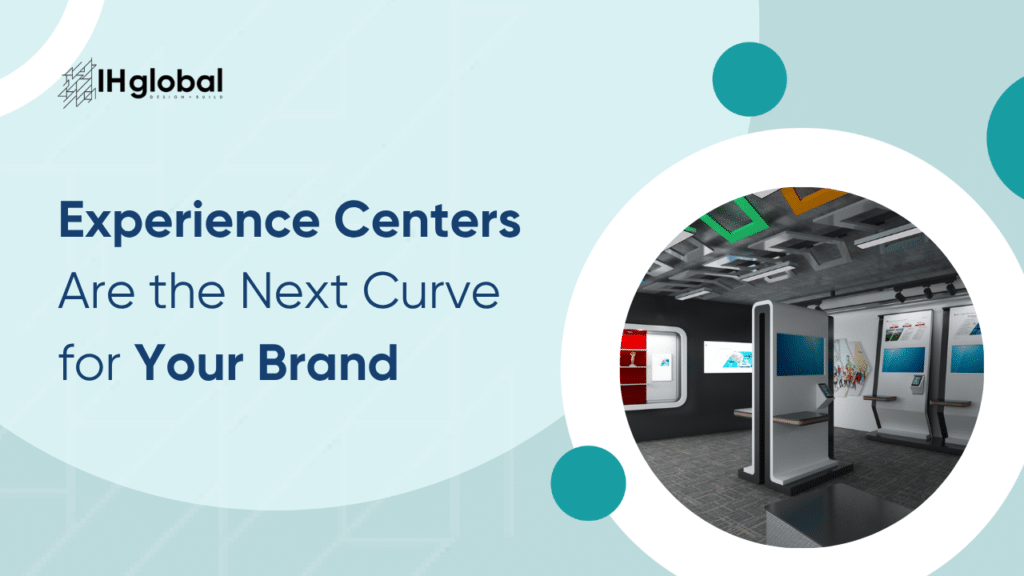
A great product still matters. Strong marketing still matters. But neither is enough when buyers want proof before they commit. That is why Experience Centers are becoming a smarter brand move for modern businesses.
This shift is not theoretical. PwC found that 73% of customers consider experience an important factor in purchase decisions, and 65% of U.S. customers say a positive experience is more influential than great advertising. In B2B, the pressure is even sharper: Gartner says 75% of B2B buyers prefer a rep-free buying experience, while Forrester expects more than half of large B2B transactions to be processed through digital self-serve channels.
That means brands need spaces that do more than present. They must educate, clarify, and build confidence.
TL;DR/Summary
Experience Centers are becoming a powerful brand growth tool because they help buyers understand, trust, and engage with complex offerings more effectively. More than branded spaces, they combine storytelling, product interaction, and strategy to support stronger business conversations and faster decision-making.
In this blog, you’ll learn:
- Why Experience Centers matter for modern brands
- How they improve buyer understanding and engagement
- How IH Global helps bring them to life
Why Experience Centers Matter More Now
Today’s buyer journey is fragmented. People discover brands across websites, videos, events, social platforms, sales calls, and referrals. By the time they speak to your team, they often expect clarity, not a pitch. A well-planned Customer Experience Center bridges that gap by turning abstract value propositions into something physical, visual, and memorable.
This matters especially for brands selling complex products, high-ticket solutions, technical services, or multi-layered offerings. A brochure may explain features. A website may support awareness. But Experience Centers help visitors connect the dots between the problem they have and the solution you offer.
That is why leading brands are investing in spaces that function as Visitor Experience Centers, demo hubs, executive briefing spaces, and storytelling environments at the same time. Gensler notes that customer experience centers can help grow sales, diversify customers, enrich employee experience, and activate underused real estate when designed holistically.
What Makes Experience Centers Work
The most effective Experience Centers are not built around decoration. They are built around journey design. They guide the visitor from curiosity to understanding, and from understanding to confidence.
1. Clear storytelling, not clutter
A strong Customer Experience Center does not overload people with everything at once. It uses spatial storytelling to make the brand easy to follow. Visitors should quickly understand who you are, what you solve, and why your solution matters.
2. Hands-on product understanding
A brand becomes more convincing with interactive trade show booths. That is where an Immersive Product Interaction Zone becomes valuable. Instead of passive viewing, visitors can see workflows, touch materials, explore use cases, and experience product logic in a practical setting.
For technical or service-led brands, this can also include live simulations, guided walk-throughs, digital displays, sample zones, mock environments, or use-case-based product demo centers. A smart Immersive Product Interaction Zone reduces the distance between explanation and belief.
3. Technology that supports the message
Modern Experience Centers increasingly combine physical design with digital intelligence. Gensler recommends modular, flexible technology that can be updated over time, while PwC highlights interactive digital displays, 3D exhibition stall designs and AI-powered personalization as ways to make physical spaces more engaging and relevant. Adobe’s 2025 customer experience research also points to rising expectations around personalization, quality content, and faster, smarter delivery across journeys.
That means brands should think beyond screens for the sake of screens. The better question is: what technology helps visitors understand, compare, and remember your offering better?
4. Flexibility for multiple use cases
The best Experience Centers are not one-dimensional. They can support product demos, partner meetings, client presentations, training sessions, leadership visits, launches, and workshops. That is why many successful B2B Experience Centers are designed as flexible environments rather than static showrooms.
Where Experience Centers Create Business Value
The value of Experience Centers goes well beyond aesthetics. When designed strategically, they support brand, sales, and relationship goals together.
They make complex offerings easier to buy
In many sectors, buying decisions stall because the offer feels difficult to evaluate. B2B Experience Centers help simplify complexity. Instead of asking prospects to imagine your value, you make that value tangible through flow, demonstration, and context.
They shorten the trust-building phase
Trust grows faster when people can see consistency across message, environment, product, and team. That is why Immersive Brand Experiences matter. They do not just impress visitors. They help them feel that the brand is credible, prepared, and clear about its own promise.
They create better internal alignment too
Visitor Experience Centers with premium booth design are not only for external guests. They also help internal teams understand how the brand should be presented. Sales, marketing, leadership, and operations can align around a more unified story.
They turn physical space into a strategic asset
PwC’s 2025 retail outlook points toward transforming physical spaces into experience hubs that deliver meaningful engagement. This is highly relevant to brands outside retail as well. Offices, briefing centers, and product environments can become business development tools instead of underused infrastructure.
How IH Global Helps
At IH Global, Experience Centers are approached as business environments. Our goal is to create customer experience centers that help brands communicate better, demonstrate better, and convert better.
That means starting with the visitor journey. We focus on:
- What should a first-time guest understand within the first three minutes?
- What should a serious buyer explore next?
- Where should a product story become interactive?
- Where should the space shift into a meeting, demo, or decision-making mode?
IH Global brings these answers together. Depending on your goals, our team can shape Immersive Brand Experiences through customer experience centers, product demo centers, corporate interior branding, exhibition stall designs, and experiential environments that make your offer easier to engage with.
For some brands, that may mean a high-impact Immersive Product Interaction Zone supported by digital storytelling. For others, it may mean flexible B2B Experience Centers for product showcases, briefing areas, and workshop rooms.
Final Word
The next curve for your brand is not only about being seen. It is about being experienced. Experience Centers give your audience a more convincing way to understand what you do, why it matters, and why your brand is worth choosing. In a market where attention is short and trust is hard-won, that can become a serious competitive advantage.
FAQs
What is the purpose of an Experience Center?
The purpose of an Experience Center is to help visitors understand a brand through guided, interactive engagement. It combines storytelling, product demonstration, and spatial design to build trust, improve recall, and support stronger buying decisions.
What technologies are used in modern Experience Centers?
Modern Experience Centers often use interactive displays, touchscreens, AR/VR tools, projection systems, demo automation, analytics dashboards, and AI-supported personalization. The right mix depends on the product story, visitor journey, and how much interactivity the brand needs.
How does an Experience Center help shorten the B2B sales cycle?
A well-designed Experience Center reduces confusion during evaluation. It helps prospects see use cases, understand workflows, ask better questions, and gain confidence faster. That clarity can reduce back-and-forth and move complex B2B conversations forward sooner.
What are the key KPIs for measuring an Experience Center’s success?
Key KPIs include visitor volume, dwell time, meeting-to-opportunity conversion, influenced pipeline, demo engagement, repeat visits, feedback quality, and brand recall. For B2B Experience Centers, sales velocity and stakeholder alignment are especially useful measures of impact.
Is an Experience Center the same as an Innovation Lab?
No. An Experience Center is usually designed to communicate, demonstrate, and engage with visitors. An Innovation Lab is more focused on experimentation, prototyping, and development. Some brands combine both, but their primary business purposes are different.